This is the first in a short series of linked blogs where I muse on curriculum making and instructional design. I will provide some theoretical background as an introduction and then in subsequent blogs delve more deeply into some aspects in detail. Reflecting my background, most of the detail will be in the context of physics, science and mathematics education as that is what I am most knowledgeable about, and there has also been a significant amount of research done in these subject areas, but I hope this does not reduce the relevance for those in other disciplines. In particular, I will use the topic of properties of matter and the particle theory of matter as a context for some practical examples and as a vehicle or illustration for the some of the more generic issues I will discuss.
Introduction
I have been giving the process of curriculum making quite a lot of thought in recent years. This has resulted in quite a bit of reading, listening to podcasts, and discussions with others. I have also investigated curriculum documentation from other countries beyond Scotland. Because of this extended process, what I write about here therefore overlaps with some of the themes I have touched upon in other blogs during the last couple of years, although my thinking continues to develop and be refined.
I have been thinking about curriculum making from the perspective of both national system reform and from that of a teacher or department/faculty or school or cluster improving their practice. In my experience many think about curriculum rather narrowly and define the ‘curriculum’ as the documents such as the Curriculum for Excellence Experiences and Outcomes or National Qualifications Specifications we have here in Scotland. However, these are just part, albeit a very important part, of the curriculum and of the curriculum making process.
That the curriculum is not just the documents handed down from on high in any jurisdictions and that the curriculum is absolutely central to effective education is summed up by these statements:
“curriculum is developed across the system by actors (such as teachers) working with one another” (Priestley, 2025)
“curriculum making lies at the heart of all educational practice” (Priestley, 2025)
“everything starts with the curriculum” (Surma et al., 2025)
I very much agree with these five words by Tim Surma and colleagues. The curriculum is certainly not the only important thing in the work of schools, but if we have a good curriculum then so much else becomes much easier and it therefore should be at every school’s core. To describe the process of curriculum making I have developed the model shown in figure 1.
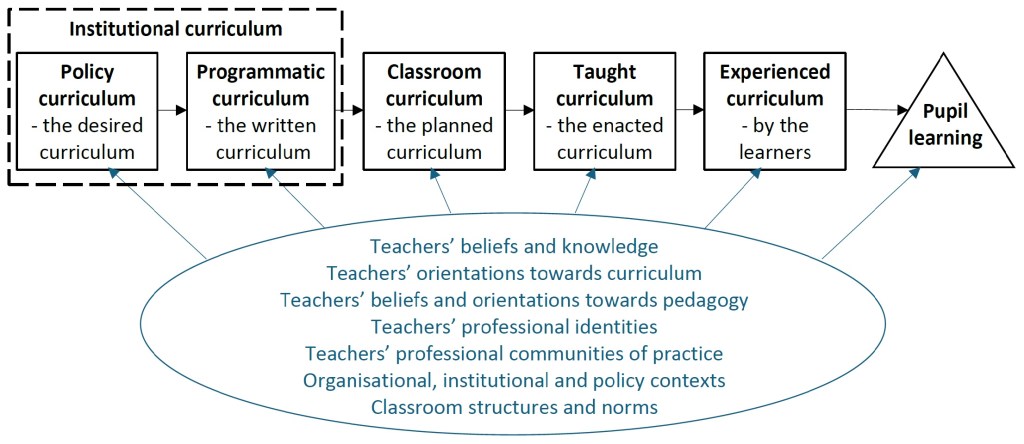
Figure 1: The stages of curriculum making adapted from (Deng, 2020) and (Surma et al., 2025)
This model shows how the curriculum making process is shaped by factors such as teachers’ beliefs, knowledge, norms and identities, both individually and collectively. As these vary from teacher to teacher it is inevitable the outcome of the process varies even when there are common policy and programmatic curricula such as national curriculum documents; what Deng (2020) refers to as the institutional curriculum. When it comes to the decision making by teachers during the classroom and taught curriculum making stages, the ‘why’ and ‘what’ of the institutional curriculum cannot be separated from the ‘how’ of the pedagogical decisions made.
“The enacted curriculum cannot be disentangled from pedagogy.” (Priestley et al., 2025, p14)
These pedagogical decisions can greatly affect the curriculum experienced by pupils and the learning that ensues.
So, how do we improve the process of curriculum making, and how do we know if we have been successful?
If we are to determine whether any change is successful then we must be able to gather objective data on pupil outcomes, something that Scotland has not done well in recent decades. National Qualifications data are reasonably reliable, but although a great deal of effort is put into ensuring similar outcomes year on year these assessments can drift over time, with potential step-changes when major refreshes take place such as with the introduction of the new CfE qualifications over a decade ago. Since it was decided to withdraw from the TIMSS and PIRLS studies nearly twenty years ago, PISA is the only international assessment data available to us, although this will be rectified soon. For younger children, the Scottish National Standardised Assessments (SNSA) are a poor substitute for the sample-based assessments of the past, and they only cover reading, writing and numeracy. It means that anyone wishing to evaluate the impact of any curriculum or instructional change in a subject like physics cannot rely fully on existing objective assessments. Producing relevant assessment instruments to determine outcomes should therefore be a major consideration for anyone wishing to undertake a rigorous approach to improving curriculum or instruction.
Making the institutional curriculum
The institutional curriculum sets the vision for the curriculum and should also provide the framework for teachers and others within when developing their classroom curricula. The institutional curriculum also has an important role in setting out assessment expectations. It is important that the voice of teachers, who bring knowledge of classroom realities, is heard within the process of producing the institutional curriculum alongside those with more specialist curriculum-making expertise and a knowledge of the wider policy environment within which the curriculum sits. I have commented on my experience of such processes elsewhere (Farmer, 2025).
For a subject such as physics which easily crosses borders, I do not think it unreasonable that the key principles for the policy curriculum and even the programmatic curriculum should be significantly different in different jurisdictions. What we want from a ‘good physics education’ across the primary and secondary school ages should be broadly similar everywhere. The top-level curriculum principles should also be similar even in other subjects such as literature, history, or geography where the local content and context will vary in different jurisdictions. To help curriculum makers at all levels the Institute of Physics developed curriculum design principles for the physics curriculum (Institute of Physics, 2024b). These emphasise not just the ‘big ideas’ of physics, but the importance of the ‘practices and ways of thinking’ of physics and the ‘applications’ of physics. There are similar documents for biology, chemistry and primary science (RSB, 2021; ASE et al., 2024; RSC, 2025). Such documents, developed by teams of experts over a significant timescale, and in consultation with others, provide an excellent starting point for those tasked with developing the institutional curriculum in the sciences. However, they are also of relevance to all teachers tasked with developing their classroom curriculum and considering the knowledge and skills they want their pupils to learn, to be aware of, and to experience in order to engage meaningfully in the culture of the subject and in society more widely. These documents have been produced using the collective wisdom of many. This includes teachers, teacher educators, university academics, and those with education policy and curriculum and assessment development experience. These documents set out the ‘big ideas’ of the subject and also give guidance to the content deemed appropriate at different ages. This is a very good starting point, but when it comes to the development of the classroom curriculum where teachers need to decide on how to blend together a mix of curriculum content, classroom resources and materials and pedagogy we need more.
Making the classroom curriculum
I would like to think that no teacher is so isolated in their work environment that they are solely responsible for taking the institutional curriculum and making their classroom curriculum. The level of expertise required, the need to sound ideas of others, and the sheer workload of doing this well is beyond any individual, and for anyone to be expected to do so completely unreasonable. If this is the case, the outcome is almost certainly to be suboptimal for their pupils as no individual has all the necessary skillset or the time to consistently do the task well. When classroom curriculum making it is important for teachers to draw upon empirical evidence and research to guide decisions as well as the expertise of others.
The classroom curriculum making work of teachers is significantly easier if they have a well-specified institutional curriculum that provides a clear overall vision and sufficient detail of the knowledge and skills expected of learners at year of their schooling. This makes it easier for teachers to be confident of the knowledge and skills that their pupils bring with them from previous years. This has been a major problem with Scotland’s Curriculum for Excellence. However, when making their classroom curriculum it is not just a case of teachers compiling resources and activities that allows them to tick off the content as laid out in the documents of the institutional curriculum. If this approach is taken, it is very likely that this will result in inefficient coverage of the curriculum giving the perception of an overloaded curriculum and inadequate time to ‘cover’ the curriculum.
I think classroom curriculum making and the instructional design that this involves has two main aims. These are to teach pupils:
- as much as possible in the time available, i.e., efficiency, and
- knowledge that they can apply in less familiar contexts, i.e., understanding.
In my experience, I think it is quite common for teachers to sequence the content in the topics and units of work they develop in their classroom curriculum and resources and activities they develop in the order in the programmatic curriculum documents such as the Experiences and Outcomes and Course Specifications in Scotland. It does help if the programmatic curriculum has been carefully constructed and consideration has been given to the sequencing of content to include at appropriate points the powerful knowledge that is essential to enable future learning, and sensible spacing of threshold or hinge concepts, as this can be difficult to retrofit at a later date (Hendrick, 2026). However, even with a well-specified programmatic curriculum, teachers need not follow the sequencing of the programmatic curriculum, and I would argue that it is very unlikely that this ought to be the case if the two aims I have stated above are to be realised. Often the sequencing of programmatic curriculum documents is driven by assessment specification rather than by thoughts about learning.
So, how should teachers approach classroom curriculum making and the related instructional design? This should not just be left to individual teachers’ hunches. When I go into hospital for a procedure, I want the doctors and nurses to proceed with my treatment informed by appropriate clinical trials and to do whatever has been shown to give the best patient outcomes. Likewise, when I get on an aircraft I expect the pilot, ground crew, and air traffic controllers not just to do what their gut tells them but to follow the nationally and internationally agreed protocols that keep aircraft safely in the air. If medical or airline staff were not to do this, they would be seen to be unprofessional and potentially face sanction. Unfortunately, this is the opposite of what I most frequently see in education where individual or small groups of teachers are largely left to decide on what is best practice with little or no research-based evidence to inform their decision-making or a systematic approach to relevant local data collection. In many places there is even a culture whereby using instructional materials developed by others using research and evidence-informed development processes is considered to de-professionalise teachers rather than it being an essential part of teacher professionalisation in the same way as the two professions I have described above. This is a perspective that always puzzled me but is increasingly perplexing me as it appears so resistant to change within Scottish education.
Theoretical frameworks to support the curriculum and instructional design process
Two years ago, in the second of a series of four linked blogs about improving education, I wrote about an example of research-based development of optics teaching in Austria. This is a good example of a systematic approach taken by a few physics teachers, physics teacher educators and physics education researchers but is still a relatively small and isolated example. What is available to support teachers improve curriculum and instructional design at scale? What theoretical frameworks can be used to underpin curriculum content selection and sequencing and/or the design of effective instructional materials?
There are several well documented frameworks or approaches to support teachers’ thinking, some with more of a focus on curriculum and others on instruction.
Grant Wiggins and Jay McTighe developed the Understanding by Design or ‘backward design’ approach (Wiggins and McTighe, 2005, 2011). This begins with the identification of the learning objectives of a lesson, unit, or course, i.e., what pupils are expected to learn and be able to do. Then the process works ‘backward’ to create assessments that demonstrate pupils have learned what was identified in the learning objectives. Finally, the learning activities and instructional materials that align with and support the achievement of the learning objectives are created.
The backward design approach has some commonality with the concept-based approach of Erickson, Lanning and French (Erickson, Lanning and French, 2017). Here consideration is given to the Structure of Knowledge and how facts are linked into topics that build conceptual understanding and generalised principles. Consideration is also given to the Structure of Process and how skills, strategies and processes also build conceptual understanding and generalisable principles.
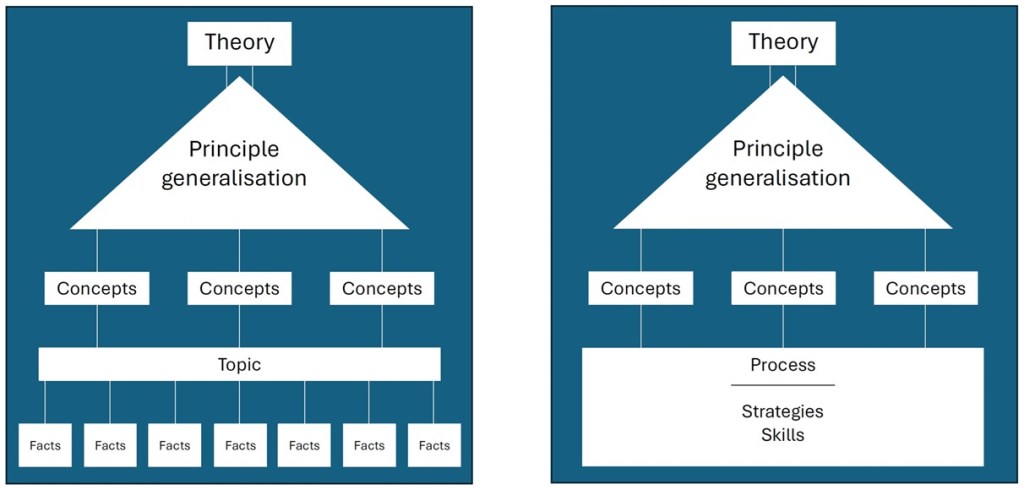
Figure 2: The Structure of Knowledge and The Structure of Process (Erickson, Lanning and French, 2017, p30)
Erickson and colleagues’ advice is to develop curriculum within disciplines using a know/understand/do model that allows pupils to then solve complex problems and engage in interdisciplinary learning.
“our suggestion to curriculum developers and teachers is – develop disciplinary ways of knowing, understanding, and doing systematically through the grades, but engage students in complex problems to solve, or issues to understand, that encourage the flexible use of disciplinary knowledge and processes in interdisciplinary studies” (Erickson, Lanning and French, 2017)
When identifying the most appropriate content for a curriculum it is important that the substantive or propositional knowledge of the subject concepts (the knowing that) and the procedural knowledge of processes and skills (the knowing how to) are integrated in a coherent and efficient manner. Elizabeth Rata developed the Curriculum Design Coherence (CDC) Model (Rata, 2019, 2024) to facilitate this.
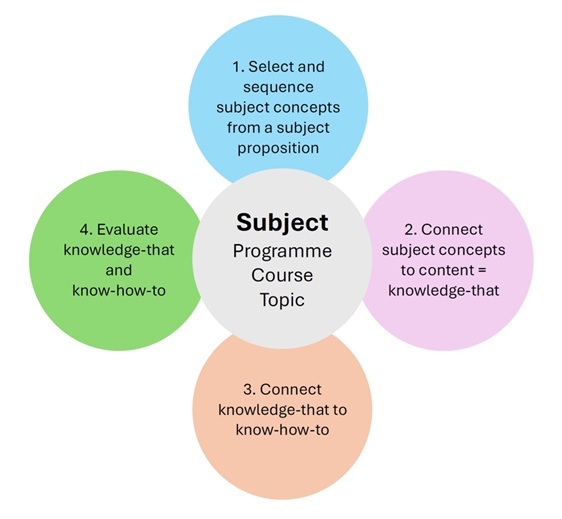
Figure 3: Curriculum Design Coherence Model (Rata, 2019, 2024)
This model consists of a process of four elements. The process begins with element 1 where the proposition and its constituent concepts for the curriculum strand, unit, or topic is identified and sequenced. Element 2 connects the subject concepts to content. The selected content should be the best expression of the concepts, demonstrate how the concepts might have changed or developed, and be content that society values and expects each generation to know. In element 3 the procedures, skills and practical applications derived from mastery of the core concepts and content is identified, and finally, in element 4 there is evaluation of how effectively pupils connect their theoretical understanding to practical application. This can include assessment of factual recall, the demonstration of a skill or technique, or the choice of a procedure or strategy in less familiar situations or to solve problems.
The most significant, and by far the most detailed, work on instructional design is Zig Engelmann and Doug Carnine’s Theory of Instruction: Principles and Practice (Engelmann and Carnine, 2016).
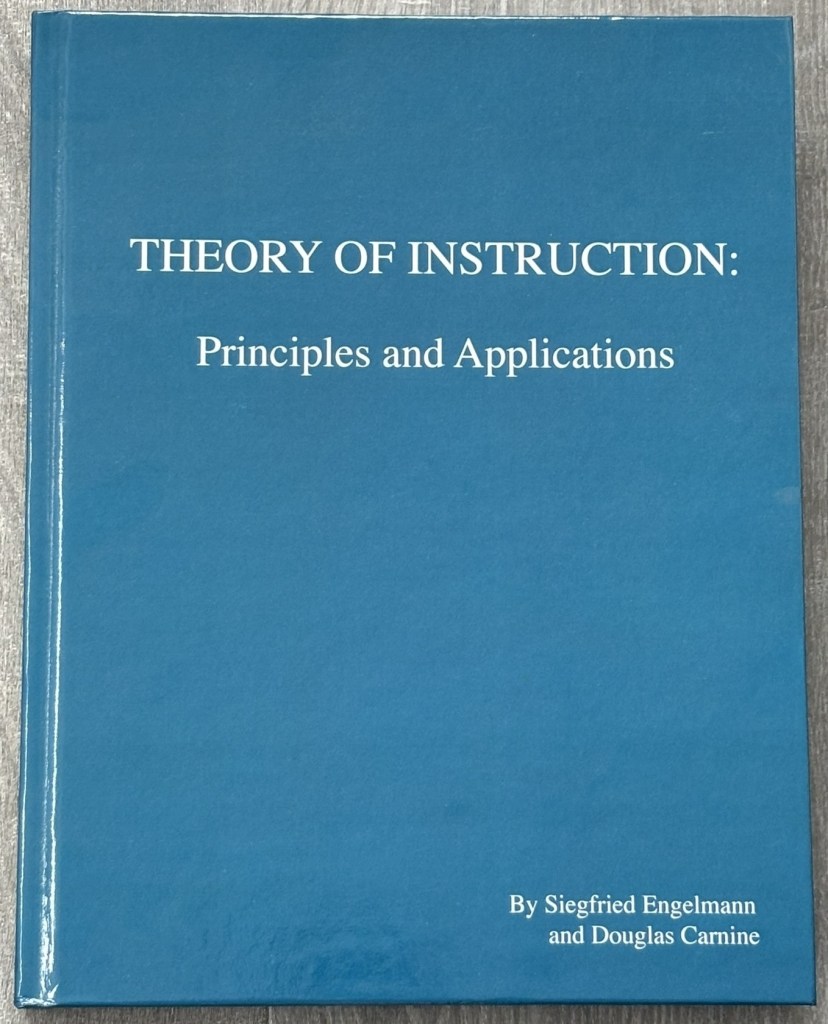
Figure 4: Engelman and Carnine’s Theory of Instruction (still in good condition)
It is a doorstop of a tome and not an easy read, and I must admit that despite a few tries, I have never got very far though it before being distracted by other things. I suspect that is a common experience, and one that Professor Becky Allen admitted to only managing to overcome recently. She went on to then describe in a Substack article a problem created due to its inaccessibility.
“Let me start by saying the thing that nearly everyone in education privately thinks: the Engelmann DI community has a bit of a cult problem. Not because the ideas are wrong – many of them are genuinely powerful – but because Theory of Instruction is so painful to read that the only people who finish it are the kind of people who become evangelists for it. The rest of us form our views secondhand. This distorts the conversation in both directions. The devotees over-claim, because they’ve invested so much effort that the framework feels more complete than it is. The sceptics under-claim, because they’re reacting to the evangelism rather than the actual ideas.” (Allen, 2026)
Despite not having been able to finish Theory of Instruction (yet?), I have read other works by Engelmann and Carnine and several accounts of it or podcast discussions drawing on it. I have found the books by Kurt Engelmann, Zig’s son (Engelmann, 2024), Tom Needham (Needham, 2026) and Anita Archer and Charles Hughes (Archer and Hughes, 2011) to be much more accessible gateways to the main ideas of Zig Engelmann. I have also read two of Zig Engelmann’s books describing his work and experiences; Teaching Needy Kids in Our Backward System: 42 Years of Trying and War Against the Schools’ Academic Child Abuse (Engelmann, 2007, 2020). The provocative titles of these piqued my curiosity and clearly illustrate his frustration with the educational establishment and the lack of widespread uptake of his very thoroughly developed approaches and resources despite the overwhelmingly positive research supporting their effectiveness. I get the impression he was not someone who suffered fools gladly. I am perhaps verging on the evangelical, but there is so much in his work that I wish I had known at the start of my 42 years in education.
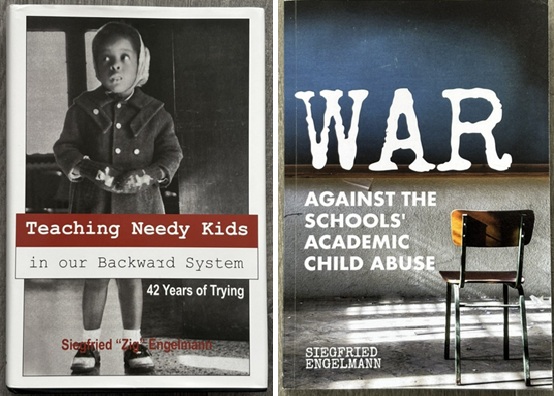
Figure 5: Books by Zig Engelmann
The observation that Becky Allen makes in her Substack article (Allen, 2026) is that Engelmann’s main contribution is how to communicate what pupils are to learn in a manner that makes it all but impossible for them not to learn it, rather than deciding on what should be learned in the first place. She states:
“By the time you are ready to apply his [Engelmann’s] principles, the hardest design work should already be finished.
- You have worked out whether the knowledge domain can be usefully classified according to Engelmann’s principles.
- You have decided what mental model students should build.
- You have decided what simplifications are acceptable.
- You have designed a narrative or structure that makes the knowledge memorable.
- You understand where students are starting from.
Only then do you ask: How do I communicate this so learners necessarily acquire it?
Engelmann gives a precise answer to that question. If you know exactly what discrimination or procedure students must learn, his machinery can ensure they learn it reliably.
He is a novel theorist of instructional communication, and not so much a theorist of knowledge or curriculum design.” (Allen, 2026, bold in original)
To focus of Engelmann and Carnine’s work is therefore more on the identification of the sequencing and communication of content of a curriculum to enable efficient mastery rather than on the initial concept selection.
All four of these approaches, Wiggins and McTighe, Erickson, Lanning and French, Rata, and Engelmann and Carnine require a detailed content analysis and this is something which can only be done well by people with deep knowledge of the disciplinary subject matter involved, the pedagogical content knowledge of the discipline, and the content analysis process being used. This includes knowledge of the foundational subject matter, how to transform subject matter into something accessible to learners, and of the connections between topics in the curriculum. This knowledge is described in the knowledge framework for teachers of physics developed by IOP (Farmer, 2024; Institute of Physics, 2024a) which is based on Tim Rowlands’s Knowledge Quartet (Rowland, 2013). I also strongly suspect that when looking at instructional resources, such as workbooks or textbooks, that the quality of the underlying content analysis on which they are based, if indeed they are based on one, is largely invisible, or only becomes visible with some effort, and therefore the difference between very good and quite poor resources can be fairly difficult to determine retrospectively.
One approach to conducting a content analysis for the sciences comes from John Loughran, Amanda Berry, and Pamela Mulhall’s work on science teachers’ pedagogical content knowledge (Loughran, Berry and Mulhall, 2012). They developed the tools of CoRes (Content Representations) and PaP-eRs (Pedagogical and Professional-experience Repertoire). I suspect this approach could be applied outwith the sciences too. A CoRe provides a framework to identify the important ideas or concepts in a unit or course on a disciplinary area such as forces, the circulatory system, or chemical reactions. This allows the identification of the knowledge pupils are intended to learn about in a particular idea, why it is important for pupils to know the idea, how the idea links to other ideas or future study of the idea, difficulties connected with teaching the idea, knowledge about pupils’ thinking, influences on the teaching of the idea, justifications for teaching procedures, and ways of ascertaining pupils’ understanding of the idea. The associated PaP-eRs then allow the organisation of information about the teaching of the idea or concept identified in the CoRe. This helps make visible the necessary pedagogical content knowledge needed to teach the topic. These tools are a mechanism whereby knowledgeable and experienced teachers can make their knowledge of a topic more visible to others. I think the ability to do so is a very important part of classroom curriculum making and reaching some general agreement out its content and what should be prioritised.
In the subsequent blogs I will delve into some of these ideas more deeply and also discuss some case studies into curriculum and instructional design.
References
Allen, B. (2026) Engelmann Last, Becky Allen – Falsifiable. Available at: https://profbeckyallen.substack.com/p/engelmann-last.
Archer, A. L. and Hughes, C. A. (2011) Explicit Instruction: Effective and Efficient Teaching. New York: Guildford Press.
ASE et al. (2024) Developing a Primary Science Curriculum: Recommendations based on the Primary Curriculum Advisory Group’s Framework. Available at: https://www.rsc.org/getContentAsset/917b828b-6adc-46e4-987c-c14b4ba73c70/f4c91d86-ac3e-4675-bdf3-f8325ded9710/stem-primary-curriculum-recommendations.pdf.
Deng, Z. (2020) Knowledge, Content, Curriculum and Didaktik: Beyond Social Realism. Abingdon: Routledge.
Engelmann, K. E. (2024) Direct Instruction: A Practitioner’s Handbook. Woodbridge: John Catt.
Engelmann, S. (2007) Teaching Needy Kids in Our Backward System: 42 Years of Trying. ADI Press.
Engelmann, S. (2020) War Against the Schools’ Academic Child Abuse. Eugene: NIFDI Press.
Engelmann, S. and Carnine, D. (2016) Theory of instruction : principles and applications (Revised Edition). NIFDI Press.
Erickson, H. L., Lanning, L. A. and French, R. (2017) Concept-Based Curriculum and Instruction for the Thinking Classroom. 2nd edn. Thousand Oaks, CA: Corwin.
Farmer, S. (2024) ‘A Knowledge Framework for Teachers of Physics and Physics Teacher Educators: The Genesis of a Knowledge Framework Based on the Knowledge Quartet’, Education Sciences, 14(7), p. 687. doi: 10.3390/EDUCSCI14070687.
Farmer, S. (2025) ‘Curriculum development processes in Scotland: Who and how?’, Curriculum Journal. Available at: https://doi.org/10.1002/curj.352.
Hendrick, C. (2026) Retconning the Curriculum: Why The Science of Learning Has a Serious Design Problem, The Learning Dispatch: Exploring the Science of Learning. Available at: https://carlhendrick.substack.com/p/retconning-the-curriculum-why-the.
Institute of Physics (2024a) Subject knowledge framework for teaching physics | IOPSpark, IOP Spark. Available at: https://spark.iop.org/framework.
Institute of Physics (2024b) The fundamentals of 11 to 19 physics | Institute of Physics. Available at: https://www.iop.org/about/publications/fundamentals-11-19-physics.
Loughran, J., Berry, A. and Mulhall, P. (2012) Understanding and Developing Science Teachers’ Pedagogical Content Knowledge. 2nd edn. Rotterdam: Sense Publishers.
Needham, T. (2026) Engelmann’s Direct Instruction in Action. London: Hachette Learning.
Priestley, M. (2025) Curriculum making: A brief history and future directions | BERA. Available at: https://www.bera.ac.uk/blog/curriculum-making-a-brief-history-and-future-directions.
Priestley, M. et al. (2025) Towards a typology of curriculum policy approaches. IBE UNESCO. Available at: https://unesdoc.unesco.org/ark:/48223/pf0000393083.
Rata, E. (2019) ‘Knowledge-rich teaching: A model of curriculum design coherence’, British Educational Research Journal, 45(4), pp. 681–697. doi: 10.1002/BERJ.3520.
Rata, E. (2024) ‘The Curriculum Design Coherence Model’, Research Handbook on Curriculum and Education, pp. 261–279. doi: 10.4337/9781802208542.00025.
Rowland, T. (2013) ‘The Knowledge Quartet: The genesis and application of a framework for analysing mathematics teaching and deepening teachers’ mathematics knowledge’, SISYPHUS Journal of Education, 1(3), pp. 15–43. doi: https://doi.org/10.25749/sis.3705.
RSB (2021) Evolving 5-19 Biology: recommendations and framework for 5-19 biology curricula. Available at: https://www.rsb.org.uk/policy/education-policy/curriculum.
RSC (2025) The elements of a successful chemistry curriculum. Available at: https://www.rsc.org/policy-and-campaigning/education/chemistry-curriculum-framework.
Surma, T. et al. (2025) Developing Curriculum for Deep Thinking: The Knowledge Revival. Springer. doi: 10.1007/978-3-031-74661-1.
Wiggins, G. and McTighe, J. (2005) Understanding by Design: Expanded 2nd Edition. Alexandria, VA: ASCD.
Wiggins, G. and McTighe, J. (2011) The Understanding by Design Guide to Creating High-Quality Units. Alexandria, VA: ASCD.


Leave a Reply