In this blog I would like to consider the purpose and content of a properties of matter strand in a science curriculum. It follows on from the previous blogs in the series where I set out some theoretical background, a case study from early in my career, and some observations from analysing curricula from different jurisdictions.
The examples I give in this blog come with a qualification. My subject background is physics, with some maths and other sciences too. I am well aware that physics and mathematics are two of the most hierarchical subjects in the curriculum and that sequencing and detail are therefore more critical than in some other disciplines. I am therefore also aware that the level of detail in some of the examples I will give below may be greater than might be thought necessary in some other subjects, nevertheless I hope that this does not diminish the usefulness of my narrative for those outwith physics education. The tables of curriculum content are also designed for a teacher audience and not for use by pupils. It is important that teachers use their pedagogical content knowledge to transform this subject content into forms accessible to their pupils.
In the second blog, I provided some justification why the topic of properties of matter and the particle theory of matter should be included in any school science curriculum. That all matter is made up of particles is perhaps the biggest of all the ‘big ideas’ in science. An understanding of how matter is made up of particles underpins much of chemistry and physics but is also fundamental to understanding one of, if not the most, significant issue of our age – the climate crisis.
To enable pupils to gain a good understanding of the necessary ideas it is important to therefore build up pupils’ knowledge and understanding in a coherent and progressive way from a young age. I would advocate that we need to enable teachers to effectively build from children’s existing experiences and introduce the relevant knowledge and practices to expand their understanding in a planned and considered manner drawing of the best research and practical evidence available. My second blog in this series described one of my early attempts at this. There are some who advocate introducing quite abstract modern physics topics to primary aged children (Einstein-First, no date), but I will take a more traditional approach here. What I set out below is the core entitlement for a properties of matter curriculum strand designed to ensure all pupils develop a common base of knowledge through to the point of greater subject specialism. This does not preclude any teacher extending beyond this entitlement with some pupils if that is appropriate, however, consideration should always be given about the continuity, progression and socialisation across the education of a child. Broadening learning outwards may be more advantageous in many circumstances than automatically extending learning upwards. However, this is always a local classroom curriculum making decision that should be made by the teacher based on the knowledge of their pupils and their context.
Properties of Matter: a content analysis
Taking an approach informed by Wiggins and McTighe’s Understanding by Design approach (Wiggins and McTighe, 2005, 2011), Erickson’s Structure of Knowledge and Structure of Process (Erickson, Lanning and French, 2017) and physics education research (for example: Institute of Physics, no date; Driver, Guesne and Tiberghien, 1985; Driver et al., 1994), what are the basic facts relating to the properties of matter that might be appropriate for children to learn at different stages, and what sorts of practices might support that learning?
Early years
I must admit that my direct experience of the early years is limited, but from my research, including my analysis of what is expected of young children in the curricula of various jurisdictions, see my previous blog on curricula from different jurisdictions, and conversations with others that are more expert than me, I think the main idea is to develop concept of ‘an object’ and that objects can have distinctive characteristics that we can perceive using one or more of our senses. This of course means that this then overlaps with the start of another strand of the sciences curriculum, that of human body systems.
Figure 1 illustrates how appropriate knowledge and practices could be specified for the beginnings of the properties of matter curriculum strand.
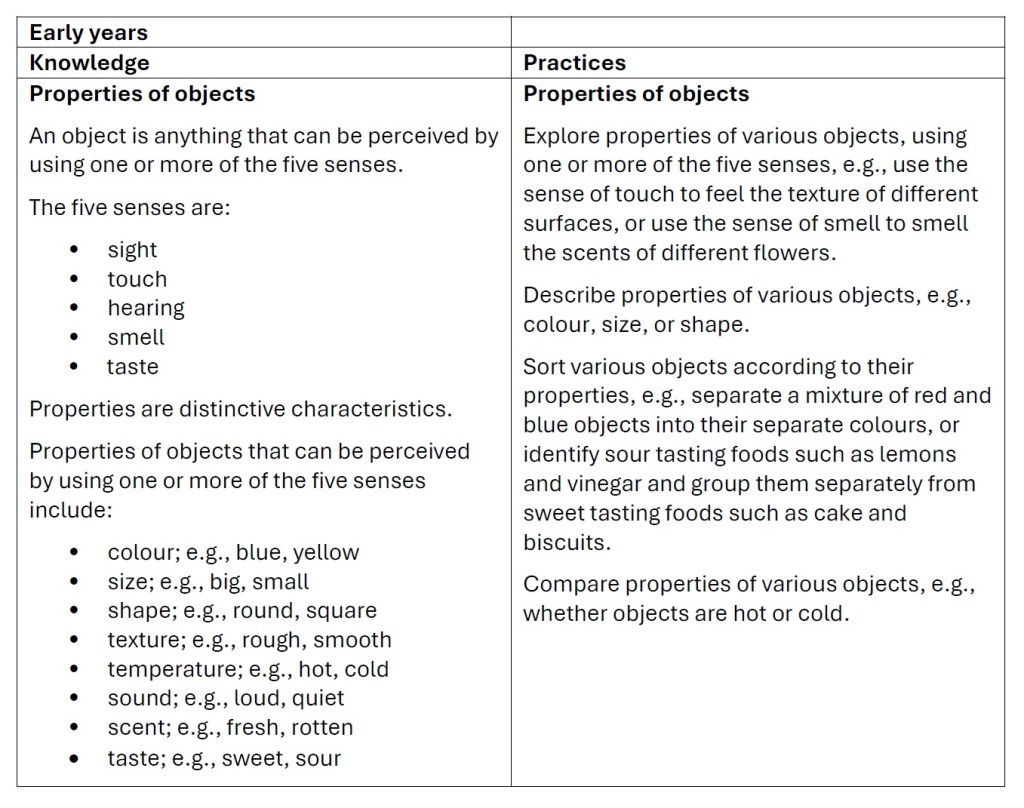
Figure 1: Knowledge and practices for the early years for a properties of matter curriculum strand
The statements in figure 1 specify details such as naming the five senses. This is not because I expect any early years practitioner not to know what the five senses are, but because a curriculum statement such as this reduces any ambiguity. The inclusion of examples also provides an illustration of the sort of language and vocabulary expected. This level of detail is in effect a very basic form of professional learning for the users. Including such detail also helps ensure that all children develop a common base of knowledge during their early years and therefore when they move into lower primary their teachers can reasonably expect pupils to have this knowledge. These teachers should of course use diagnostic assessment strategies to check that this is indeed the case and ensure appropriate interventions are in place as required. However, I think it reasonable to expect any 5-year-old child to know what their five senses are, what an object is, or to use descriptive terms such as green, round, hot, small, rough and smooth about objects.
I have already stated that this curriculum content also leads on to a biological science strand but there will also be overlaps with strands in other subjects, such as shape in mathematics, but this should not detract from the fact that teachers ought to be aware that this knowledge is the beginnings of the development of the properties of matter strand that leads on to much of chemistry and physics. If this was perhaps better understood by more teaching in the early years and lower primary, then subjects such as chemistry and physics might not be stereotyped as being ‘hard’ or ‘not for me’ by so many.
Lower primary
In lower primary, it is important to build on the knowledge and practices of the early years and further develop conceptual understanding. If young children have understood the concept of an object, then the next stage is to identify the material it is made from and distinguish the material from the object. Everyday materials can then be identified and the distinction made between natural and synthetic materials. This has important implications for an understanding of issues such as composting, recycling and pollution which could be a useful context in which to set teaching about properties of matter. Teaching remains about the macroscopic properties of matter, and the particles theory of matter is still kept for later, unless of course ‘keen beans’ may wish to enquire beyond the core curriculum entitlement for all at this stage. A good reason why clearly specified curricula can be useful for teachers at all stages as they can be easily aware of what comes before and after the stage they may be teaching at any given time.
Figure 2 illustrates how the curriculum can be specified for lower primary teachers.
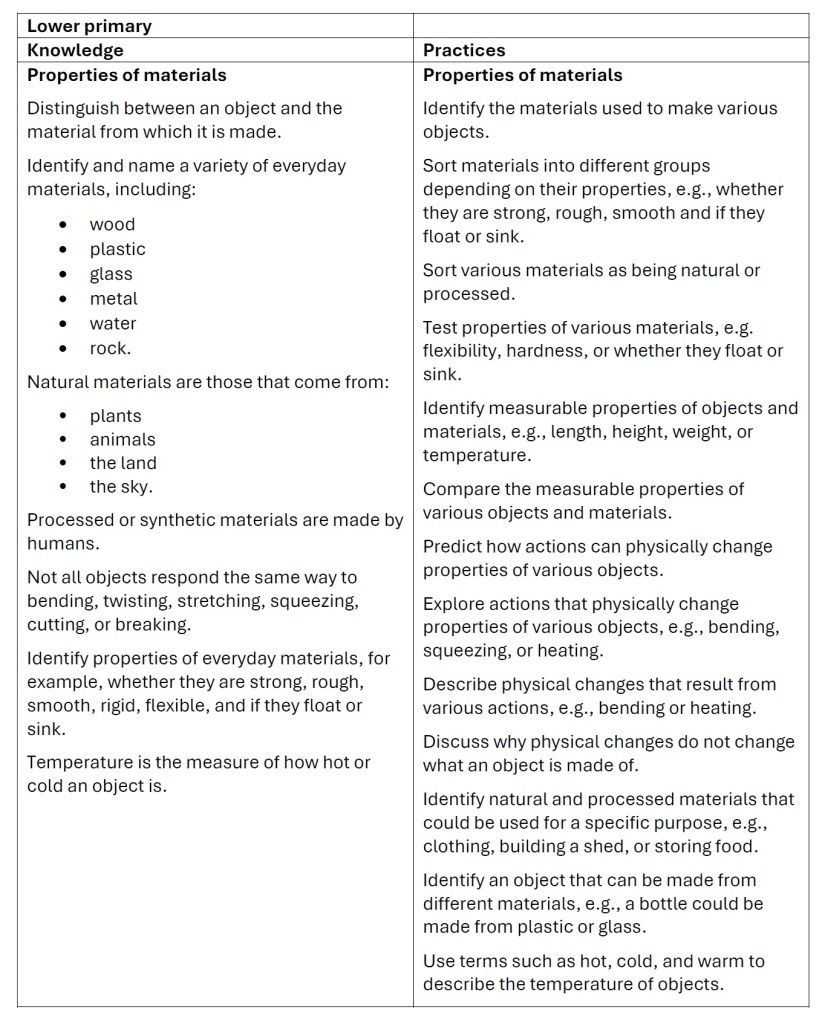
Figure 2: Knowledge and practices for lower primary for a properties of matter curriculum strand
Upper primary
It can be seen from the curricula in jurisdictions like Alberta and Singapore that I discussed in my previous blog that by the middle primary years it is not unreasonable to expect pupils to learn about the states of matter in some depth, particularly using water as a convenient substance that can exist as solid, liquid and gas in everyday environments. However, it is important to not focus on water too much as there is a danger of pupils then over-generalising and developing misconceptions, or under-generalising and not being able to transfer their learning to other relevant situations. See Needham (2026, p14-27) for a good discussion of Engelmann’s concept of ‘sameness’, and examples of how over- and under-generalisation can cause problems for learning with examples given for several subjects. Later chapters in the book illustrate the use and sequencing of examples and non-examples when teaching various ideas.
Figure 3 illustrates how the curriculum can be specified for upper primary teachers with a focus on teaching about the states of matter.
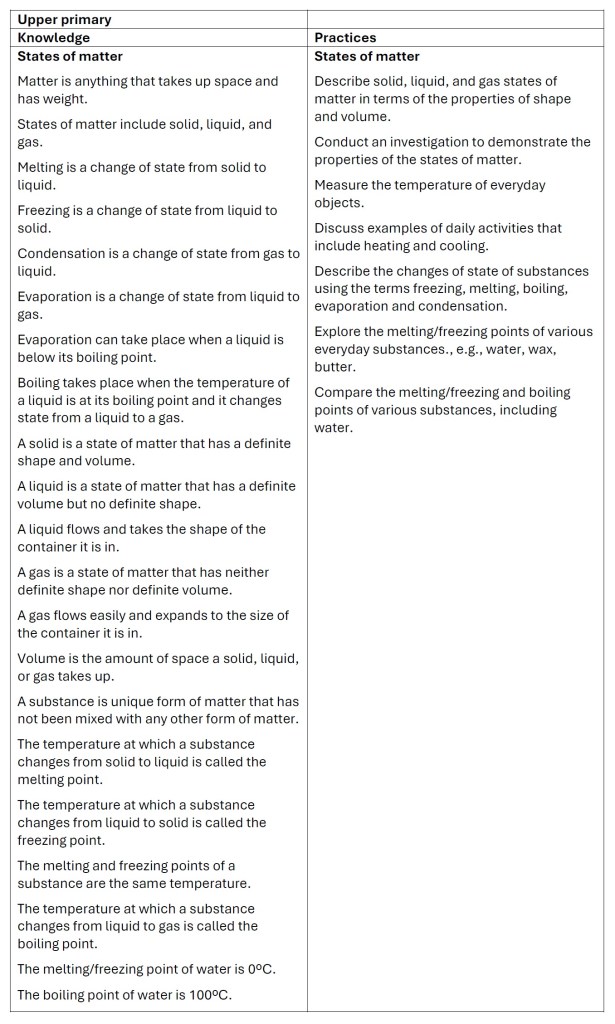
Figure 3: Knowledge and practices for upper primary for a properties of matter curriculum strand
Figure 3 sets out the vocabulary expected at this level with definitions of terms such as evaporation, boiling, melting point and substance. This includes information that will help avoid the teaching of misconceptions such as confusion between the processes of evaporation and boiling.
Lower secondary
Once pupils transition to secondary school, they are most likely to be taught by a specialist science teacher and the depth of treatment of topics within the curriculum increases and becomes more specialised. However, this is an important stage as it may well be the final stage of schooling when all pupils study all of the sciences, certainly in Scotland if not in other jurisdictions. Therefore, an important purpose of the curriculum up to and including this stage is to provide the knowledge and skills it is reasonable for all citizens to possess as well as provide the foundation of which further specialist study can be built.
Compared to the curriculum for properties of matter in the early years and primary it is reasonable to expect there to be an increase in content in the lower secondary stage. It is therefore helpful to introduce sub-strands into the curriculum to help organise its content. Figure 4 shows four sub-strands which could make up the properties of matter curriculum for the lower secondary stage.
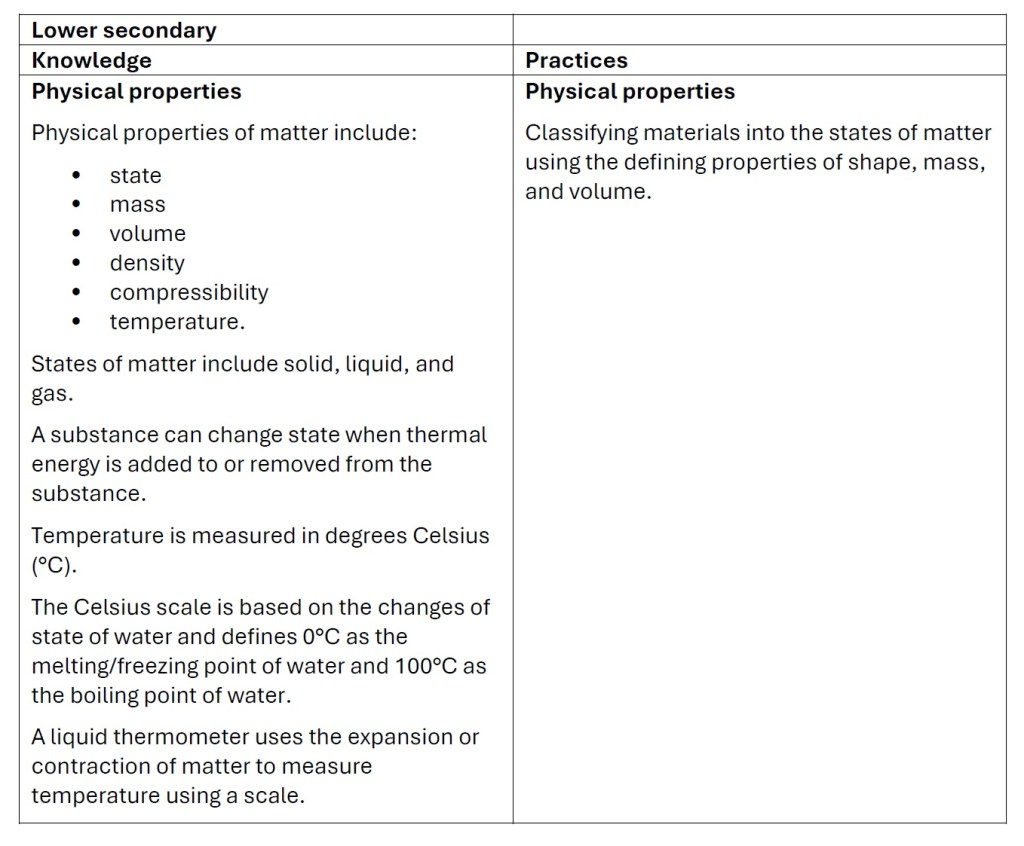

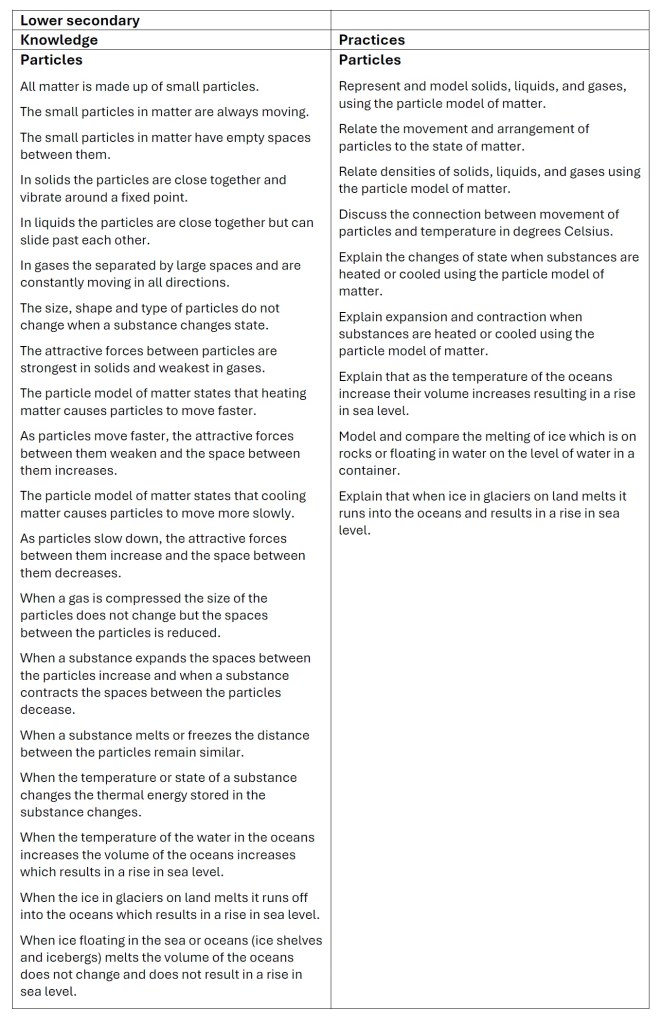
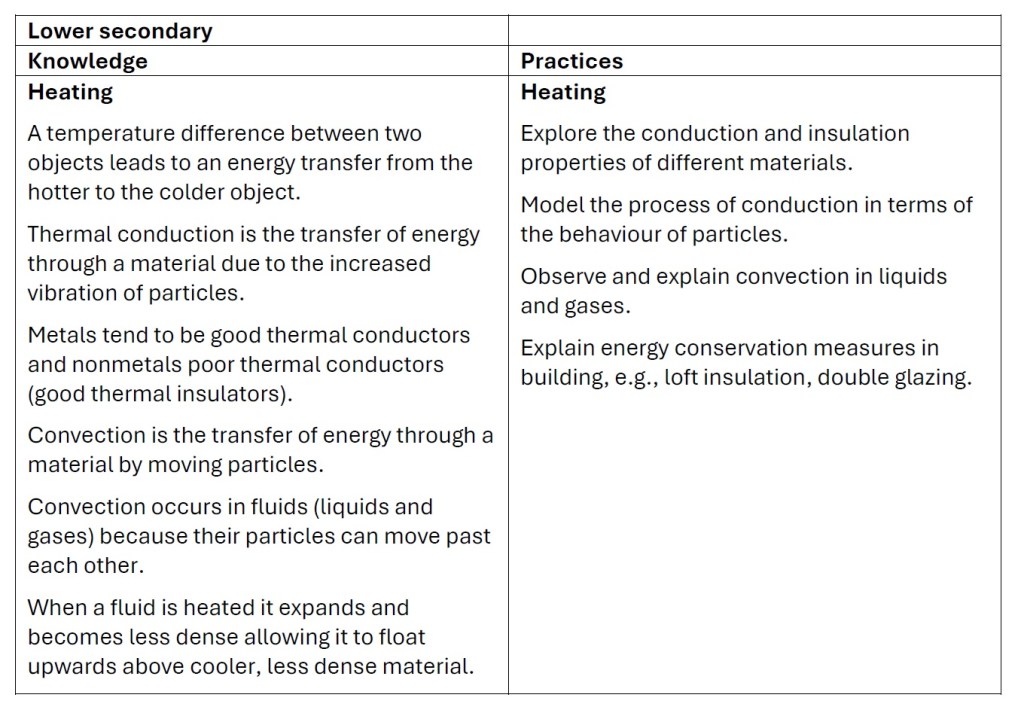
Figure 4: Knowledge and practices for lower secondary for a properties of matter curriculum strand subdivided into four sub-strands: physical properties; density; particles, and heating.
The content shown in figure 4 is written to provide some clarity regarding common misconceptions such as that particles do not move in solids, or that there is air in spaces between the particles in a gas, or that the spaces between particles in a liquid are significantly further apart than those in a solid. It is important that those responsible for writing an institutional curriculum of this sort are well informed by physics education research such as that available on the IOP Spark website (Institute of Physics, no date), the Best Evidence Science Teaching website (BEST, no date), and seminal texts by the likes of Ros Driver (Driver, Guesne and Tiberghien, 1985; Driver et al., 1994), and advice from books such as Teaching Secondary Physics (de Winter and Hardman, 2021).
Knowledge and practices in the properties of matter strand, particularly that which introduces the particle theory of matter, also start to overlap with or feed into other strands or sub-strands of the curriculum in the sciences, for example, figure 5 shows two other sub-strands which might be included in a curriculum strand on electricity which rely on an understanding of matter being made up of particles.

Figure 5: Knowledge and practices for lower secondary for a curriculum sub-strands on atomic structure and electrostatics.
Upper secondary
If pupils continue to study physics and chemistry into upper secondary school, and courses leading to qualifications, then the curriculum further specialises and expands in content. I will not specify the curriculum at this stage in as great detail as I have in the previous figures as this would take up considerable space, but the physics curriculum strands building on the properties of matter and particle theory of matter are likely to include the gas laws and kinetic theory, buoyancy, radioactivity, particle physics, elements of electrostatics, electromagnetism and electric circuits, and quantum physics.
Pedagogy, applications and local context
The figures above include details of knowledge and practices for the institutional curriculum. They do not include details of pedagogy or very many applications. These should be part of a teacher’s classroom curriculum-making and local instructional design process. However, as I stated in the first blog in this series, I would hope that no teacher is every left to do this on their own, or is unsupported with suitable core resources they can use as a starting point. I believe that an important role of teachers as professionals is to have sufficient autonomy and agency to decide on how they teach the common content of a well-specified institutional curriculum. However, I also believe that these pedagogical decisions should be based on sound evidence, both from research and experience. There are elements of teaching which should be considered a science and others a craft. Teachers should be able to combine theory (episteme) with the wisdom of practice (phronesis) (Korthagen and Kessels, 1999). Teachers should also know their local context and be able to make the knowledge they teach come alive through relevant applications and local contexts. Therefore, it is unwise to write too many specific contexts into institutional curriculum documents. The inclusion of how black and white cathode ray tube televisions produce a picture being included in the Standard Grade Physics course is a salutary lesson. This may have been appropriate when the course was written in the 1980s but certainly was not by the time of the last Standard Grade Physics examinations in 2013. Although, having said that, of all the courses I have taught, Standard Grade Physics was the best programmatic curriculum in terms of getting a good balance of knowledge, practices and applications. The problem was that the Scottish Government did not allow it to be updated as some of the specified applications became out of date. It is important when teachers decide on their classroom curriculum and their instructional resources that they consider all four areas of the curriculum included in the Institute of Physics curriculum design principles (Institute of Physics, 2024), as shown in figure 6, and do not let one area unduly dominate the others.
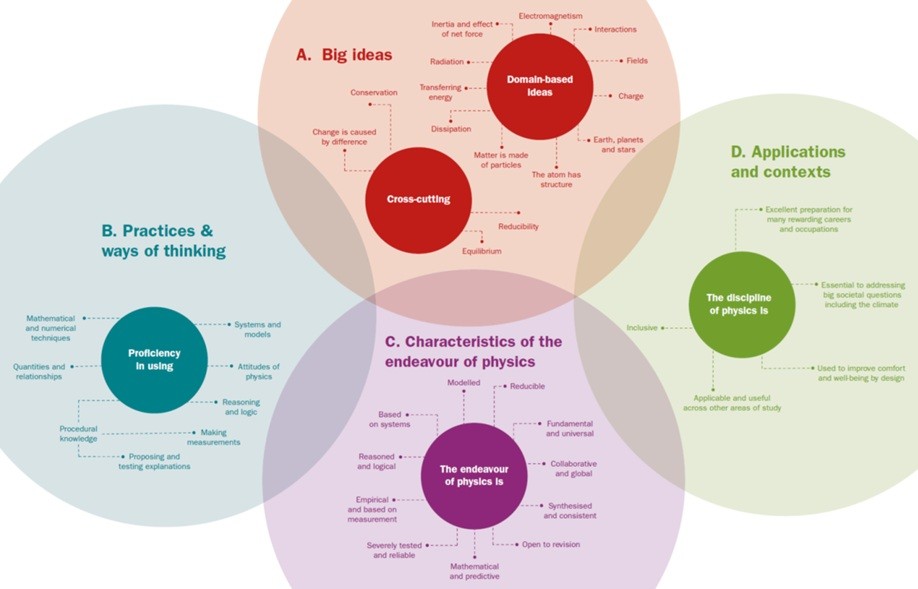
Figure 6: The big ideas, practices and ways of thinking, characteristics of the endeavour of physics, and applications and contexts of physics (Institute of Physics, 2024).
Having said that, one context which I consider to be important to include in the curriculum is the climate crisis.
The climate crisis
The scientific understanding of the climate crisis relies on many of the relatively simple ideas included in the content of the properties of matter strand detailed above. I think it is important that all young people, as part of their general education up to lower secondary age, are taught the knowledge which can explain many of the scientific aspects of the climate crisis.
For nearly a decade, I and several of the Institute of Physics Scotland physics coaches have run professional learning workshops on the physics underpinning climate change. This is thanks to my links with the Perimeter Institute in Canada which has produced resource packs to support primary and secondary teachers teach about climate change (Perimeter Institute, 2016, 2018), see figure 7.
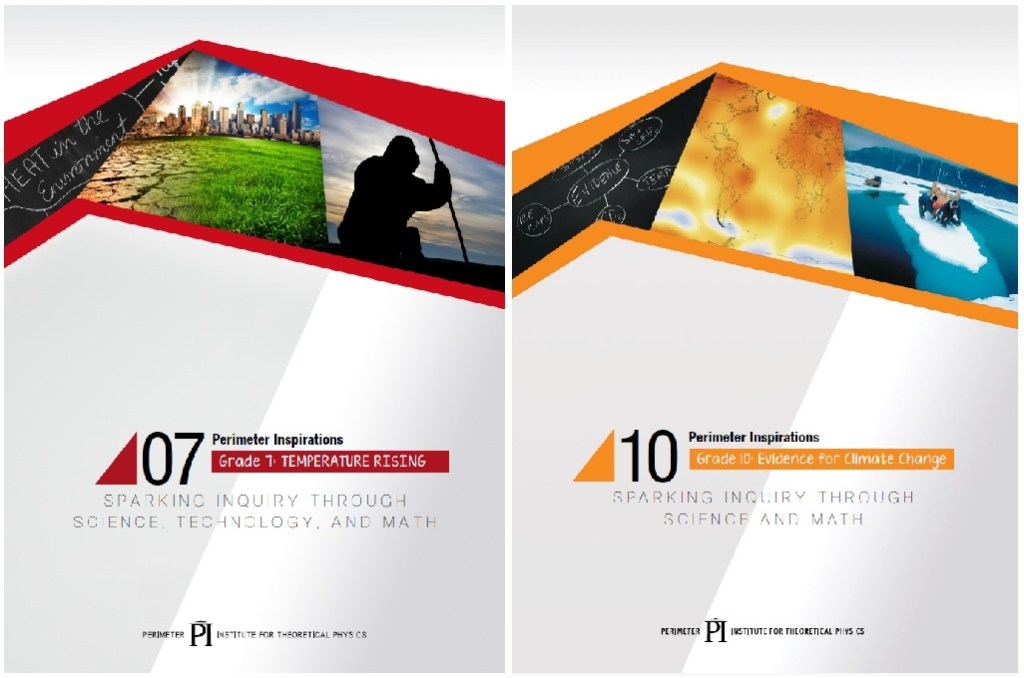
Figure 7: Perimeter Institute resources for teaching climate change (Perimeter Institute, 2016, 2018).
I first saw demonstrations of some of their simple teaching activities when I visited the Perimeter Institute in 2018 and I thought they were some of the most powerful activities they had produced. The educational resources from the Perimeter Institute are written by teams of teachers and researchers, field tested in schools, and reviewed by a team of international experts which results in well considered high-quality resources. In 2019, I was also able to bring Greg Dick, Damian Pope and Laura Pankratz from the Perimeter Institute educational outreach team over to Scotland to do a tour around Carnoustie, Elgin, Glasgow, Ayr and Dunfermline to deliver workshops to Scottish teachers. An unexpected highlight of the tour was that on the way from Elgin to Glasgow we stopped at the Macallan distillery in Craigellachie and Greg was able to purchase a specially engraved bottle of malt which he was able to present to Jane Goodhall, famous for her work with primates, on the occasion of her 85th birthday shortly after returning to Canada.
The tables in figure 4 include knowledge about density, expansion, changes of state, and convection which are all relevant to understanding climate change. These also include specific knowledge statements necessary to understand the impact of rising sea temperatures and melting glaciers on sea level rise as well as some simple practices to demonstrate and model this. This being specified in the curriculum means that these relatively simple ideas should be learned by all. Other strands of the physics curriculum should include other relatively simple ideas such as the absorption, reflection and emission of radiation which underpins the greenhouse effect. Knowledge of how satellites are used to conduct Earth monitoring, of the additional energy stored in our warming oceans, of the gases in the air, of renewable energy resources, as well as knowledge of how to interpret graphs, such as the Keeling curve of atmospheric carbon dioxide levels, should all be accessible to lower secondary age pupils and ensure that they are then well placed to consider climate crisis issues with a sound scientific understanding. This would go a long way to ensure future generations have a sound scientific foundation to be critical of the anthropomorphic climate change denialism of many right-wing politicians and the right-wing media. It would also provide a sound foundation to enable young people to go on to further studies which will help address the climate crisis such as the semiconductor physics of photovoltaic cells and the chemistry of hydrogen fuel cells to name but two. It will also provide a good foundation for those going into apprenticeships to develop the much sought after plumbing and electrical knowledge and skills needed to install the heat pumps, electric vehicle chargers, roof-top solar cells and the many other technologies we desperately need if we are to meet our climate targets. As well as well paid jobs, we need to be able to give our young people hope that these challenges can be met, and met by them.
Although the institutional curriculum documents may present these various topics in different curriculum strands across the sciences there is nothing to prevent teachers grouping the relevant content together to produce a unit on the science of climate change in their classroom curriculum. Teachers should have the agency to make decisions such as these when making their classroom curriculum. Teachers in a school, planning together, could ensure that this scientific knowledge is covered before or alongside climate crisis issues such as the flooding of coastal areas, more frequent and violent storms, droughts and wildfires, and social issues such as immigration are covered in social studies for example. In this way pupils will be better able to see how big ideas connect across the curriculum. The climate crisis is but one interdisciplinary topic which could be dealt with across the curriculum in this way. A well-structured curriculum, well taught, is much more likely to help our young people understand important issues such as the climate crisis than projects where much time is spent cutting and pasting from the internet or designing colourful posters, but where little actual learning takes place. That is not to say that some more open-ended project work cannot be a very valuable contribution to any child’s education once they have been equipped with the necessary knowledge and skills to do it justice.
Conclusion
In this blog I have worked through an example of how one curriculum strand can be developed for pupils at the institutional curriculum level, but in a manner that supports teachers to then make their classroom curriculum in a way that supports ambitious learning for understanding for their pupils. I do not claim it to be perfect, but I hope it is an interesting and informative exemplar of use to those considering similar curriculum making issues. In the next blog in this series, I will focus more closely on instructional design.
References
BEST (no date) Best Evidence Science Teaching. Available at: https://www.stem.org.uk/best-evidence-science-teaching.
de Winter, J. and Hardman, M. (2021) Teaching Secondary Physics. 3rd edn. London: Hodder Education.
Driver, R. et al. (1994) Making Sense of Secondary Science: Research into children’s ideas. London: Routledge.
Driver, R., Guesne, E. and Tiberghien, A. (eds) (1985) Children’s Ideas In Science. Milton Keynes: Open University Press.
Einstein-First (no date) Einstein-First Project. Available at: https://www.einsteinianphysics.com/.
Erickson, H. L., Lanning, L. A. and French, R. (2017) Concept-Based Curriculum and Instruction for the Thinking Classroom. 2nd edn. Thousand Oaks, CA: Corwin.
Institute of Physics (2024) The fundamentals of 11 to 19 physics | Institute of Physics. Available at: https://www.iop.org/about/publications/fundamentals-11-19-physics.
Institute of Physics (no date) Misconceptions | IOPSpark. Available at: https://spark.iop.org/misconceptions.
Korthagen, F. A. J. and Kessels, J. P. A. M. (1999) ‘Linking Theory and Practice: Changing the Pedagogy of Teacher Education’, Source: Educational Researcher Educational Researcher, 28(4), pp. 4–17.
Needham, T. (2026) Engelmann’s Direct Instruction in Action. London: Hachette Learning.
Perimeter Institute (2016) Temperature Rising. Available at: https://resources.perimeterinstitute.ca/products/temperature-rising?variant=25629217158.
Perimeter Institute (2018) Evidence for Climate Change. Available at: https://resources.perimeterinstitute.ca/collections/lesson-compilations/products/evidence-for-climate-change?variant=12375510089806.
Wiggins, G. and McTighe, J. (2005) Understanding by Design: Expanded 2nd Edition. Alexandria, VA: ASCD.
Wiggins, G. and McTighe, J. (2011) The Understanding by Design Guide to Creating High-Quality Units. Alexandria, VA: ASCD.


Leave a comment