In the preceding blogs in this series, I have provided my thoughts on some curriculum-making and instructional design theory and processes, with the occasional practical example. In this blog I will look at how such theory can be put to practical use. One observation, and suggestion, I would like to make is that no teacher should try to change everything at one; that way madness lies. Incremental change is good and also gives an opportunity to evaluate the impact of that change. A problem with changing too many variables at once is that it is impossible to determine what had a significant positive impact and what less so. This does of course mean that real change in some aspects of education can take a long time as many aspects of the life of schools operate on an annual cycle. I always found it interesting when I taught two or occasionally three classes of the same year group at the same time. Although no two classes are ever the same, the ability to try out slightly different things, or even just the same thing twice in quick succession, with immediate feedback was always informative.
Structured analysis of practice
In addition to the empirical approaches I discussed in the previous blog, much can be learned about effective practice by analysing the practice of teachers and of lessons. This is central to how Barak Rosenshine developed his principles for effective teaching (Rosenshine, 2010, 2012; Sherrington, 2019) and Tim Rowland and colleagues identified the knowledge-base of teachers described in the Knowledge Quartet (Rowland, 2013); something that I have used since to exemplify the knowledge needed to teach physics (Farmer, 2024a; Institute of Physics, 2024).
Organisation of, or participation in, such large projects are not always necessary to make useful progress. However, it is more likely that teachers or groups of teachers, such as colleagues in a department, make useful progress if they set out with a development and evaluation plan for any curriculum-making or instructional design initiative than if they begin with a more ad hoc approach where learning from the experience is left more to chance. The hectic schedule in schools means that other things will inevitably come along and many of the potential lessons which could have been learned will be missed or forgotten too quickly only to be remembered or rediscovered a year later when it is too late to act on them.
One structure which groups of teachers might use to structure such work is lesson study (Lewis, Perry and Murata, 2006). Initially developed in Japan, it provides a structure for small groups of teachers to collaboratively develop one or more lessons and the instructional materials used, field test it in classrooms, observe the practice, and then evaluate the outcomes. Practitioner enquiries (Gilchrist, 2018) or an action research approach could be used too, but preferably as part of a larger co-ordinated collaborative plan than just a series of more ad hoc developments by individual teachers. However, it is important that teachers try to be aware of potential biases or potential weaknesses in methodology to avoid coming to spurious conclusions. Using lesson study or practitioner enquiry as a vehicle for classroom curriculum-making and instructional design shows the close overlap between this work and research into effective professional learning of teachers. Using such approaches is not a ‘one and done’ process and ideally should be part of iterative cycles of development as explored in my previous blog. Figure 1 illustrates a model which I developed during my doctoral studies for a professional learning cycle which attempts to acknowledge the complexity of the process and to embed an enquiry-as-stance culture into practice.
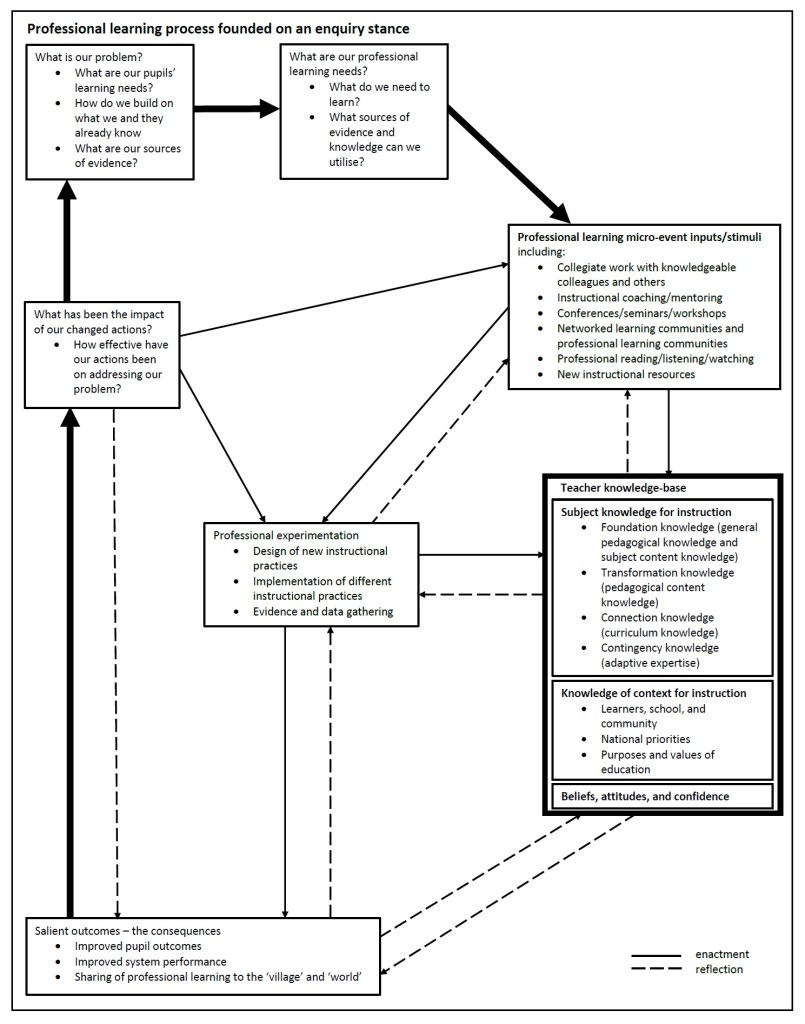
Figure 1: A model for embedding an enquiry-as-stance approach to teacher professional learning, adapted from Clarke and Hollingsworth (2002), Timperley (2008), Rowland (2013), Cobb et al. (2018) and Evans (2019)
Almost all of the literature into professional learning relates to analysis of the types professional learning used rather than the content of the professional learning undertaken during their use. By definition, if curriculum-making and instructional design initiatives are going to result in positive change, teachers are going to need to learn new things and to change their practice. However, if teacher professional learning time is spent on topics and activities which do not improve pupil learning and pupil outcomes then time, money and effort has been wasted regardless of the efficacy of the professional learning process used. Far too often in the past, many in our education system have sought a silver bullet and fallen for the latest fad, and this goes far beyond the classic educational myths that get mentioned on such occasions such as learning styles and brain gym. For more details of many common educational myths see these publications (Christodoulou, 2014, 2026; de Bruyckere, Kirschner and Hulshof, 2015; Holmes, 2016; Kirschner, Hendrick and Heal, 2025). Therefore, success of the likes of lesson study, practitioner enquiry, instructional coaching, teacher networks, or any other mode of professional learning perhaps depends less on the mode used but more on what teachers actually focus on during their professional learning time and its relevance to improving their practice and pupil outcomes.
For example, I share some of Zig Engelmann’s frustrations at the repeated attempts by many, under many different guises, to promote discovery and less guides approaches to teaching and learning rather than high-quality interactive explicit teaching. I think the accusations of ideological motives or cult followings pointed in the direction of advocates for adopting more of Engelmann’s approaches comes in part as a result of the frustration of those who have used the approaches, or are aware of the extensive evidence supporting them, being ignored or argued against by others who promote other approaches supported by little or no comparable evidence of improvement of pupil outcomes, i.e., methods that are ideologically driven rather than evidence-based. Bruce Robertson’s Teaching Delusion trilogy provides a good summary of why using interactive explicit teaching approaches are effective and provides lots of practical examples (Robertson, 2020, 2021a, 2021b). Despite the case made in the seminal paper by Kirschner, Sweller and Clark (2006) and much work since, many still advocate for approaches which go under various names such as enquiry, discovery, project-based and problem-based as the starting point for teaching new materials to learners rather than the end point we wish learners to reach once they have built up sufficient expertise through more explicit or direct instruction.
Practical strategies
I have been out of the classroom for over seven years but in the last few years I was teaching, I started to experiment with things I was learning from cognitive science and the broader research literature, as well as drawing from my own experience and my desire to see better outcomes. I will now describe some of the changes I started to experiment with which were informed by various sources of research and evidence.
Spiral curriculum
As I stated in an earlier blog in the series, a classroom curriculum does not need to follow the sequence as set out in the institutional curriculum, and that allows anyone to experiment with curriculum sequencing in the classroom curriculum. One conclusion I had definitely come to was that we needed to revisit topics more frequently in our teaching sequence. For example, in physics in Scottish secondary schools, in a form of spiral curriculum, it might be common to have the topic of mechanics spaced out in units in different years between S1 (Secondary 1 – age 12-13) and S6 (Secondary 6 – age 17-18). There might be a ‘Forces’ unit in S2, the ‘Dynamics’ unit in National 5 in S4, the ‘Our Dynamic Universe’ unit in Higher in S5 and then the ‘Rotational Motion’ unit in Advanced Higher in S6. Especially through the first three or four years when the curriculum is less influenced by the qualification courses this leaves large ‘forgetting’ gaps between the occasions pupils are exposed to the concepts in a particular strand of physics. Experience from the discontinued but largely successful Standard Grade Physics course for ages 14-16 was instructive. Many of the core physics conceptual strands were spread across two or more of the seven applications-based units which made up the course. Mechanics was split across Transport Physics and Space Physics, waves across Telecommunications, Health Physics and Space Physics, electricity across Using Electricity and Electronics, and energy across several units and not just Energy Matters. Therefore, I had begun to look at how we could revisit topics on a more frequent basis using a greater number of shorter units of work. This inevitably gives greater opportunities to revisit and consolidate prior learning as well as introduce new content. Taking such an approach makes it easier to build into teaching opportunities for spaced practice, distributed practice, interleaving, and retrieval practice.
When moving to National 5 Physics in my school, we retained a unit structure more closely resembling Standard Grade Physics with units such as Medical Physics and Our Sustainable Earth which bore no relation to the SQA course specification. This was more than just introducing ‘sexy’ titles, but we retained some of the applications-based approach of Standard Grade. In our S1/2 course we also linked topics in ways I have rarely seen. For example, we had a Particles unit which brought together electrostatics with thermal conduction and convection with the intention of illustrating the particle theory of matter underpinning what might otherwise be seen as completely different physics topics.
Even if an institutional curriculum is set out in a way that has large strands or units of related knowledge, perhaps influenced by the structure of assessment, teachers should have the agency to ‘chunk’ their classroom curriculum into smaller pieces and to bring parts of strands together in ways that emphasise the application of knowledge. The classroom curriculum need not be structured in the same way as the institutional curriculum.
Strand curriculum
A step beyond an increased frequency spiral curriculum is weaving strands together much more comprehensively in lessons. Engelmann’s Theory of Instruction (Engelmann and Carnine, 2016) provides guidance on how much new material to introduce in lessons, how much to practice this, and how much to revisit and consolidate content from previous lessons, although there is never a one-size-fits-all answer to this. The difference between spiral and strand curricula is described by Snider (2004). I had not got as far as considering this approach prior to leaving the classroom, but I had started to introduce changes to my approach to assessment which are related to this idea.
Assessment changes
Throughout my teaching career I had been using end-of-unit summative assessments together with various forms of formative assessment including regular ‘check tests’ to monitor progress pupils were making through their work. One change I had started to make was to broaden the content of the check tests to always include some questions from previous units of work as well as the recent work of the pupils. The theory is that this would motivate pupils to revisit previous work on a regular basis as part of their revision for all tests. The rationale for taking such an approach was explained to pupils along with guidance on good study habits, the guidance and videos from the Learning Scientists being particularly useful for this (The Learning Scientists, no date).
I also started to develop more well considered diagnostic questions. These were informed by knowledge of common misconceptions pupils have from both my own experience and from the physics education research literature. I was particularly thankful to Mary Whitehouse and Robin Millar from the University of York for useful conversations and for them allowing me to use some of their materials as my staring point. As well as adopting many ideas into my own practice I have run various workshops on the use of diagnostic questions for other teachers (Farmer, 2020). Three examples of diagnostic questions, all variations on multiple choice questions, but which allow teachers to gain additional information on the thinking behind the answer a pupil chooses, and thereby providing greater confidence in how to best proceed with teaching, are shown in figure 2.
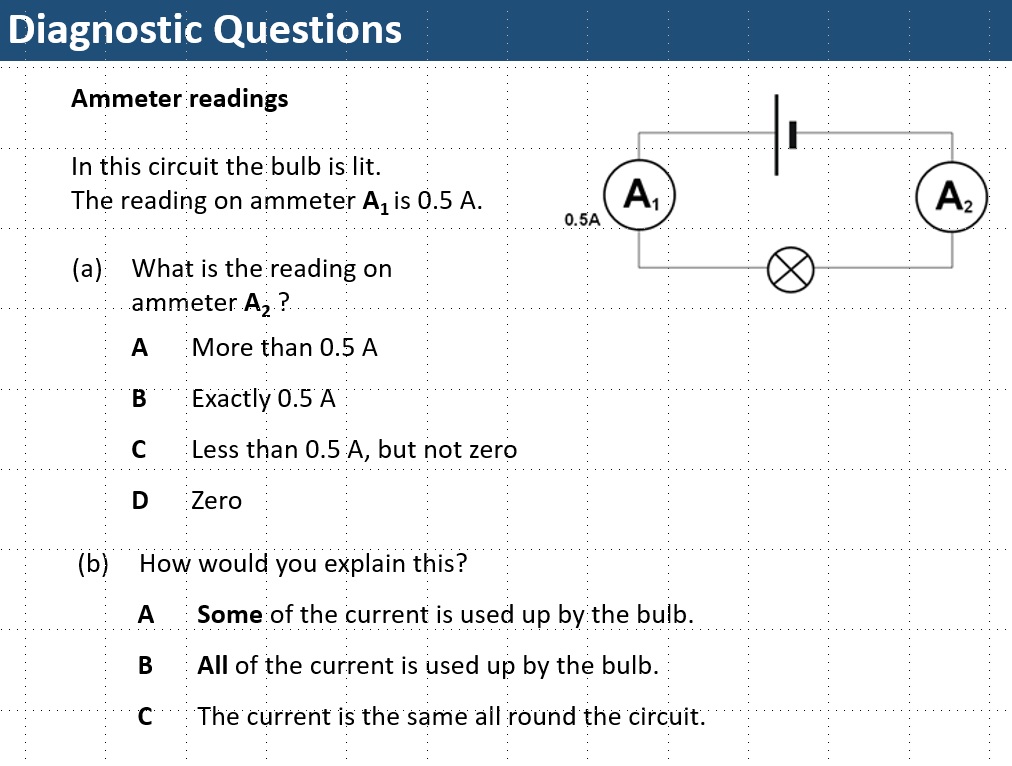
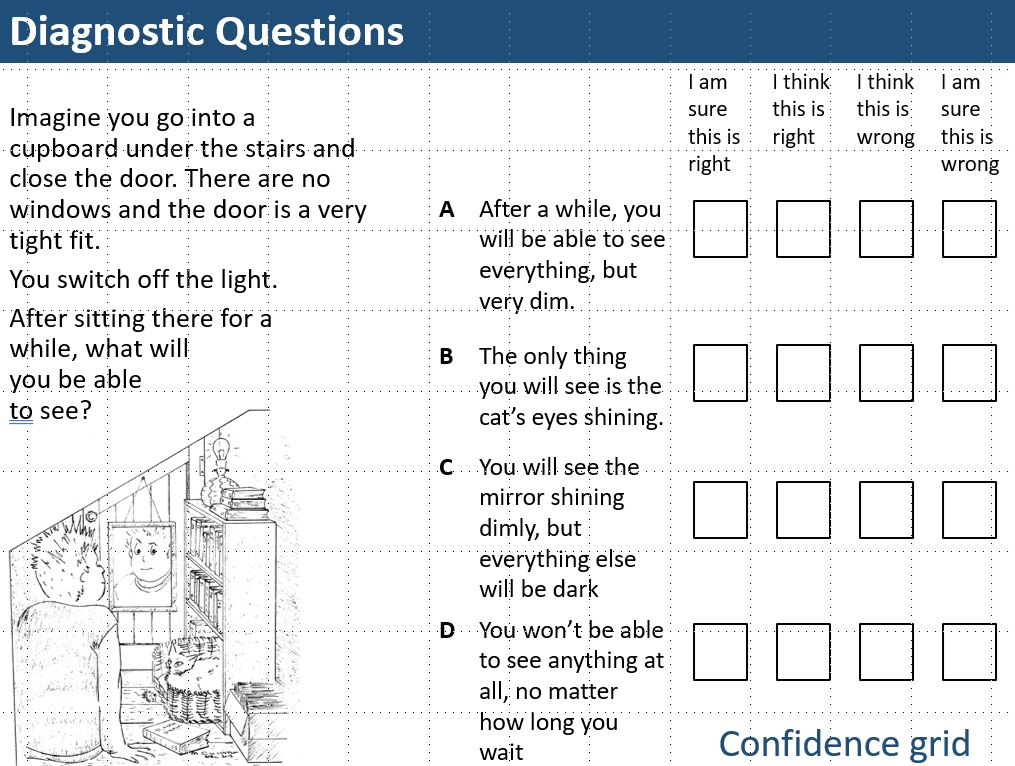
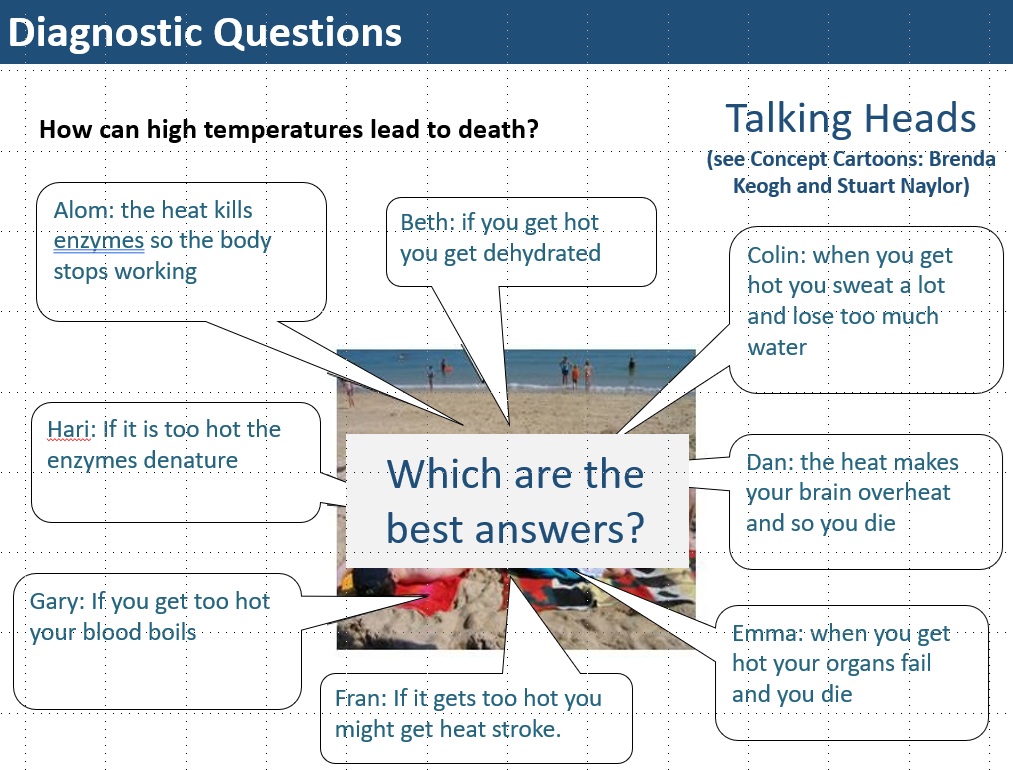
Figure 2: Diagnostic questions – two tier multiple choice, confidence grid multiple choice, and concept cartoon.
The diagnostic questions were developed using the research literature on common pupil misconceptions (for example, Institute of Physics, no date; Driver et al., 1994) plus teacher knowledge from experience teaching the topics to many classes. The inclusion of diagnostic questions in a teaching sequence allows information to be gathered on pupil thinking which allows a teacher to intervene rapidly and provide additional support for pupils who need it, perhaps by taking a small group aside for some additional teaching when others do independent practice. Leaving gaps in knowledge and understanding undiagnosed and unaddressed will make it less likely that all pupils reach a good level of mastery and can progress on to studying more advanced content.
Explanations
Another topic I began to give more consideration to was the quality of my explanations. This is something I explored in a previous series of blogs a couple of years ago. It is very easy when one is stressed or tired, not uncommon when working as a teacher, to misspeak and as a result confuse the pupils being taught. Teachers can suffer from cognitive overload when too much is going on during teaching in much same way as the pupils in front of them. I began to give more consideration to the key points and methods of communication for important parts of the curriculum. One might say that deciding to do this several decades into a teaching career might be a bit late, but it is a sad indictment of teaching that giving more thought and taking more care over such things is given such a low priority by so many, although I have known teachers who have worked with detailed lesson plans evolving them year after year. This is not going as far as the carefully scripted lessons developed by Engelmann after iterative field testing and development, but more carefully planned explanations and sequences of examples and non-examples are likely to help teachers avoid cognitive overload and ensure more accurate communication.
One change I made, which I think was making a significant difference, although I left teaching before I could gather more than anecdotal data on impact, was the use of Example-Problem Pairs. This was informed by the work of John Loughran on teacher education regarding how expert teachers make their tacit knowledge more visible to less experienced teachers (Loughran, 2006), but which can be also applied to how they make their tacit knowledge visible to the pupils they teach. It was also informed by conversations on the Mr Barton Maths Podcast (Barton, no date) and as described in his book (Barton, 2018, pp193-204).
I found the Example-Problem Pair approach to explaining numerical problem solving very beneficial. Previously, after introducing new quantities and an equation, I would typically have gone over one or two worked examples and then got the class to do some similar practice problems. However, I began to plan the examples I chose more carefully, starting with a simple example and working through it on the lefthand side of a sheet of paper with a pencil under a visualiser so the class could see clearly what I was doing. When working through the example, I would very explicitly vocalise my thought processes and decision-making rather than just demonstrate how to do the problem. I put more emphasis on the why alongside the how. Having completed this example, I would then set an identically formatted problem on the righthand side of the sheet of paper and work through it but this time asking the class what I should do at each step and why. Sometimes, for more difficult problems, I might partially work through it vocalising my thoughts before getting the class to suggest how to solve the rest as a means of providing more scaffolding. I might then repeat this cycle again with a very similar but slightly more complex Example-Problem Pair, such as introducing an additional step where units with prefixes had to be converted into standard SI units before solving the example. Only once good progress was being made by the class would I then open the class up to solving problems on their own. If there were one or two pupils still struggling, I could then focus my attention on them whilst the others continued more independently.
I found that using this more explicit and scaffolded approach built up the confidence of the pupils and resulted in them progressing on to more complex problems quickly and with more success than previously. Motivation and engagement improved. Examples of two Example-Problem Pairs, the second related to but more difficult than the first are shown in figure 3.
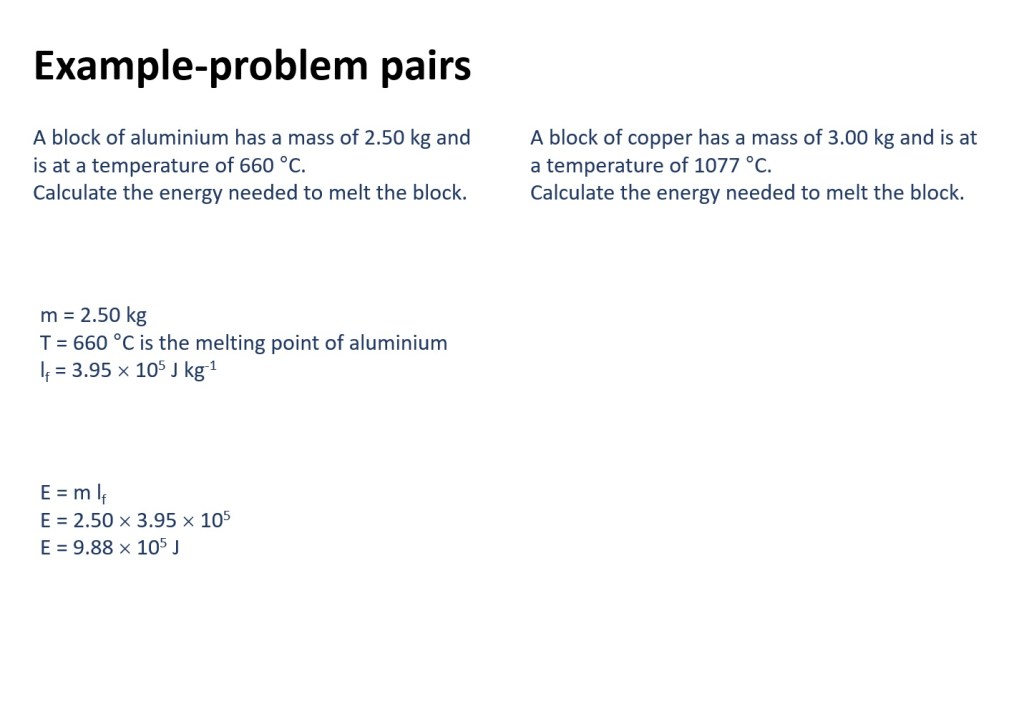
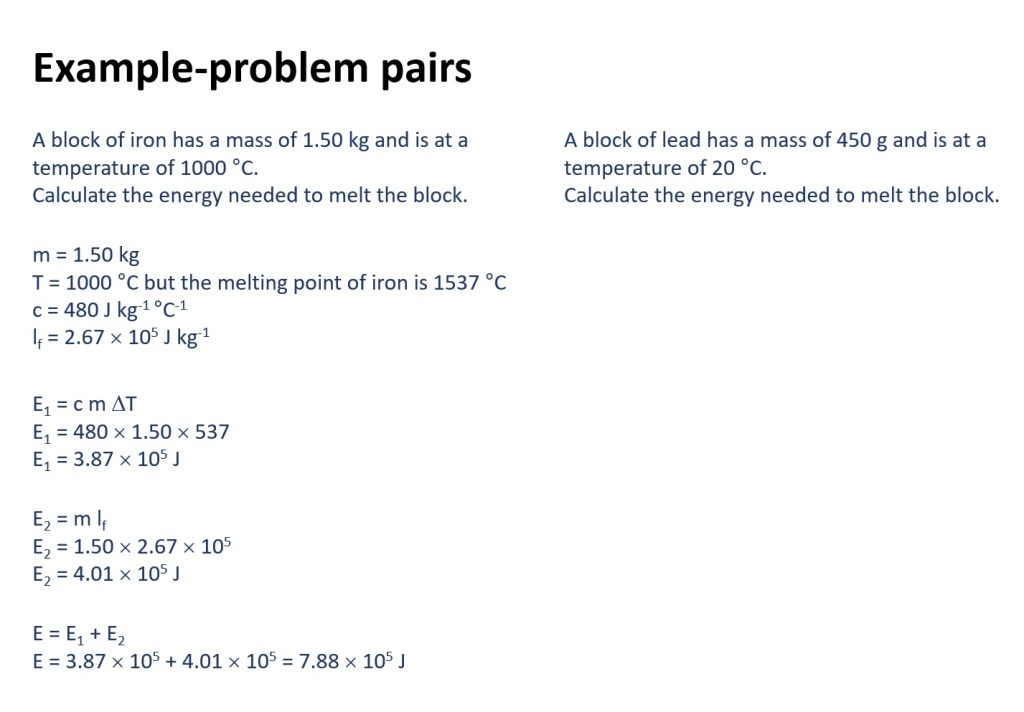
Figure 3: Example-Problem Pairs showing completed worked examples of the left and subsequent problems on the right.
The narration associated with the Example-Problem Pairs in figure 3 takes pupils through the process of interpreting and extracting information from the question including identifying the quantity symbols and appropriate units, extracting information from the related data sheet, then selecting the appropriate equation before substituting values and calculating an answer.
Although figure 3 shows PowerPoint versions, I much preferred to work with pre-prepared starter examples and problems using paper and pencil under a visualiser than with PowerPoint slides as this gave greater flexibility to adapt in the moment, and it also mirrored more closely what the pupils would then do in their own jotters. With practice, my own confidence with the strategy improved and I found I could make up, using the basic principles I had developed, good Example-Problem Pairs on the spur of the moment as required depending on feedback from the class.
When discussing this technique with teachers during professional learning sessions, something that came to light was that teachers of a certain vintage observed that for the physics courses in the 1980s and 1990s books and question banks had been available which contained lots of carefully sequenced practice problems. However, in more recent years, such resources had not been so readily available and as a result many teachers had cobbled together booklets of problems often in a great rush to ensure they had something to give to their pupils when new courses were introduced. As a result, the quality of many of the more recent resources produced by teachers was poorer. This is a clear example of giving schools and teachers more autonomy over curriculum-making and instructional design without the time and support needed to do the job well. Previously, relatively expert teachers had been given time, including by some commercial publishers, to author materials of a good standard.
The examples described above, together with the case study in the second blog in this series are examples of relatively small scale, research and evidence informed changes that any teacher should be able to experiment with when striving to improve practice and pupil outcomes. However, systemic change requires the environment and infrastructure to facilitate this, to provide the conditions that enable teachers to demonstrate agency, and to provide mechanisms to access research literature and the wisdom of others.
Professional communities
Making the tacit explicit and sharing the wisdom of experts across the teaching community is a simple way of improving practice throughout the education system, however, this will not occur at scale without some leadership and facilitation. I have always thought that belonging to effective communities and collaborating with others, together with participating in good quality subject-specific professional learning and engaging with research literature always helped my teaching. The case study I described in the second blog in this series is but one example. Participation in professional communities can occur at several different levels and different ways.
In my last teaching department, we used shared pupil booklets as the core around which to build our teaching, and all staff were able to add comments to the online master documents suggesting improvements as they were being used. One member of staff was then responsible for incorporating updates before use the following year with opportunities for discussion of contentious issues before final decisions were made. This had the benefit of there being a clear mechanism for recording and making changes but still relied on staff remembering to add comments whenever they came across issues or had ideas for improvement.
It is possible to put in place similar arrangements to share wisdom across more than one department or school, such as via a local authority subject network. Local authorities in Scotland have the potential to have an important meso-level role but my own experience and research (Farmer and Childs, 2022; Farmer, 2024b) shows that their subject networks rarely work well. There is frequently a lack of leadership either due to a lack of central staff with sufficient time or appropriate expertise to lead and facilitate such activities or the leadership of such networks is a bolt-on to the full-time teaching commitment of a teacher with little or no time, support or training to help them conduct the role. Throughout my career I have been active in networks organised by learned societies and professional bodies. These can provide a successful means of likeminded individuals to come together, develop shared resources, share experiences and expertise, and organise professional learning (Thomas, 2024). The Sputnik email forum for Scottish physics teachers has existed for over twenty years and the ‘hive mind’ is a valuable source of support for many teachers who could otherwise be quite isolated, and not just due to geographical location. Such networks have the benefit of building teacher identity and community.
One professional community which I think has been lacking throughout my career is one that brings teachers, teacher educators, and education researchers together. This is an area I have tried to promote in recent years as my own research interests have developed. This has included having physics education research (PER) as the theme for a recent Stirling Physics Teachers Meeting, the annual conference for Scottish physics teachers organised by the Institute of Physics. The Institute of Physics recently organised a UK and Ireland wide PER symposium to bring physics teachers, physics teacher educators and physics education researchers together and I have organised follow-up online PER meetings for interested parties in Scotland. One of the major problems faced by those interested in PER is that funding is very limited. PER often falls down the cracks between physics research and more generic education research, which is also poorly funded. In Scotland, in 2027, we are going to benefit from hosting the GIREP Annual Conference, a significant international PER conference, which could be the catalyst for greater interest and activity.
Education research does not always have a good reputation, and I must admit that I have frequently thought that some of the research projects, masters, and doctoral studies undertaken to be somewhat esoteric and likely to have limited impact on improving pupil outcomes in Scottish classrooms. I think there needs to be a much greater prioritisation on improving the day-to-day instruction in classrooms, that is not to say other topics are not important or do not have a place in the research environment, but a focus on improving day-to-day teaching has generally been lacking. This inevitably requires a reasonable subject-specific element, as all teachers at all levels teach content that is organised primarily through subjects developed over time for good cultural reasons. Again, I am not saying that more generic professional learning on general pedagogical topics such as formative assessment, questioning, and feedback to name but three is not valuable, and often may be the starting place for whole school development, but unless teachers are then also given the time and space to work out how more generic pedagogy can be transformed into subject-specific practices then this is unlikely to happen. Hence, my definition of subject-specific professional learning includes not only learning about subject content matter and pedagogical content knowledge but also how more generic pedagogy can be applied within different subjects. A focus on subject-specific professional learning has also been shown to work, and to improve the professional learning culture and level of engagement in professional learning (Leonardi et al., 2022), and the pupils of teachers working in supporting professional environments have better outcomes (Kraft and Papay, 2014). Vibrant and well-supported subject-specific professional communities have an important role to play in providing the right conditions for effective classroom curriculum making and instructional design.
Conclusion
I began this series of blogs with the aim to discuss and illustrate some ideas I had about improving curriculum making and instructional design which from what I see when observing Scottish education is still a very ad hoc and fairly poorly informed endeavour for most. All teachers in Scotland must be registered with General Teaching Council for Scotland (GTCS), and the GTCS professional standards (GTCS, 2021b) state that all teachers “have a depth of knowledge and understanding of research and engagement in practitioner enquiry” and “have a depth of knowledge and understanding of curriculum design” amongst many other things. The GTCS professional standards for career-long professional learning (GTCS, 2021a) take this further inserting words such as “enhanced” and “critically informed”. It is hard for teachers to do this and develop expertise if they are not given adequate time and supported to do so. Rather than just engaging with research findings, if teachers are to conduct classroom-based practitioner enquiries and action research themselves, it is important that support and professional learning to facilitate this is available too. There are dangers such as confirmation bias, of drawing conclusions based on very small sample sizes, and of dubious ethical issues if there is not adequate professional support.
This series of blogs grew arms and legs a bit and the series ended up longer than initially anticipated, but I hope they have a useful narrative arc and provide teachers some background information and food for thought. In Scotland, we are still near the start of significant period of curriculum reform, and it is important we learn lessons from the past and from elsewhere in the world as I particularly focussed on in blog three. When we do look to elsewhere it is important that we do not fall into the trap of simplistic policy borrowing. I suspect that was the case when Curriculum for Excellence replaced the two-year ages 14-16 and two-year ages 16-18 curriculum arrangement with a three-year senior phase for ages 15-18 without corresponding changes to course lengths. Just because other countries, such as Finland, have a three-year stage in upper secondary schools does not means such a change should be made without a deep understanding of the contextual factors which facilitate this and the pros and cons they experience as a result.
Of the UK nations, as I illustrated in the third blog in this series, England has performed better in PISA assessments than the other three. Since 2013, England introduced a knowledge-rich curriculum policy as well as various other, often contentious, education policy changes which are well documented in the book by the schools minister responsible for overseeing much of this (Gibb and Peal, 2025). However, just as I was finalising this blog, I read a very fair and balanced account by Mark Enser of how these changes have not necessarily been implemented, or not implemented as intended (Enser, 2026). This is a salutatory reminded that enacting both theory or policy into practice is fraught with hurdles and barriers, not least due to inconsistencies between different competing policies and the ever-present cloud of accountability which drives performativity and perverse practices in reality.
However, if there is one takeaway from the journey through these blogs, it is that success is best guaranteed with a well sequenced knowledge-rich curriculum as the starting point (Engelmann, 1993).
References
Barton, C. (2018) How I Wish I’d Taught Maths: Lessons Learned from Research, Conversations with Experts, and 12 Years of Mistakes. Woodbridge: John Catt.
Barton, C. (no date) The Mr Barton Maths Podcast. Available at: https://podcast.mrbartonmaths.com/.
de Bruyckere, P., Kirschner, P. A. and Hulshof, C. D. (2015) Urban myths about learning and education. London: Academic Press.
Christodoulou, D. (2014) Seven myths about education. Abingdon: Routledge.
Christodoulou, D. (2026) The Problem with Transferable Skills. Available at: https://www.aei.org/wp-content/uploads/2026/07/The-Problem-with-Transferable-Skills.pdf?x97961.
Clarke, D. and Hollingsworth, H. (2002) ‘Elaborating a model of teacher professional growth’, Teaching and Teacher Education, 18, pp. 947–967.
Cobb, P. et al. (2018) Systems for Instructional Improvement: Creating Coherence from the Classroom to the District Office. Cambridge, MA: Harvard Education Press.
Driver, R. et al. (1994) Making Sense of Secondary Science: Research into children’s ideas. London: Routledge.
Engelmann, S. (1993) ‘The Curriculum as the Cause of Failure’, The Oregon Conference Monograph, 5, pp. 3–8. Available at: https://www.zigsite.com/PDFs/Curriculumascauseoffailurepdffinal.pdf.
Engelmann, S. and Carnine, D. (2016) Theory of instruction : principles and applications (Revised Edition). NIFDI Press.
Enser, M. (2026) The knowledge-rich revolution that never was, Teaching is Real. Available at: https://enserm.substack.com/p/the-knowledge-rich-revolution-that.
Evans, L. (2019) ‘Implicit and informal professional development: what it “looks like”, how it occurs, and why we need to research it’, Professional Development in Education, 45(1), pp. 3–16.
Farmer, S. (2020) Diagnostic Questions (Physics Teacher Virtual Summer School) – YouTube, SSERC TV. Available at: https://www.youtube.com/watch?v=ixAXACIuboE.
Farmer, S. (2024a) ‘A Knowledge Framework for Teachers of Physics and Physics Teacher Educators: The Genesis of a Knowledge Framework Based on the Knowledge Quartet’, Education Sciences, 14(7), p. 687. doi: 10.3390/EDUCSCI14070687.
Farmer, S. (2024b) The alignment of policy and practice for the career-long professional learning of teachers in Scotland. University of Strathclyde. Available at: https://stax.strath.ac.uk/concern/theses/w66344189.
Farmer, S. and Childs, A. (2022) ‘Science teachers in northern Scotland: their perceptions of opportunities for effective professional learning’, Teacher Development, 26(1), pp. 55–74.
Gibb, N. and Peal, R. (2025) Reforming Lessons: Why English Schools Have Improved Since 2010 and How This Was Achieved. Abingdon: Routledge.
Gilchrist, G. (2018) Practitioner Enquiry: Professional Development with Impact for Teachers, Schools and Systems. Abingdon: Routledge.
GTCS (2021a) The Standard for Career-Long Professional Learning: An Aspirational Professional Standard for Scotland’s Teachers. Edinburgh: General Teaching Council for Scotland. Available at: https://www.gtcs.org.uk/wp-content/uploads/2021/09/standard-for-career-long-professional-learning.pdf.
GTCS (2021b) The Standard for Full Registration: Mandatory Requirements for Registration with the General Teaching Council for Scotland. Edinburgh: General Teaching Council for Scotland. Available at: https://www.gtcs.org.uk/wp-content/uploads/2021/09/standard-for-full-registration.pdf.
Holmes, J. D. (2016) Great Myths of Education and Learning. Chitchester: Wiley Blackwell.
Institute of Physics (2024) Subject knowledge for teaching physics: A framework for teachers of physics. London. Available at: https://spark.iop.org/framework.
Institute of Physics (no date) Misconceptions | IOPSpark. Available at: https://spark.iop.org/misconceptions.
Kirschner, P. A., Hendrick, C. and Heal, J. (2025) Instructional Illusions. London: Hachette Learning.
Kirschner, P. A., Sweller, J. and Clark, R. E. (2006) ‘Why Minimal Guidance During Instruction Does Not Work: An Analysis of the Failure of Constructivist, Discovery, Problem-Based, Experiential, and Inquiry-Based Teaching’, Educational Psychologist, 41(2), pp. 75–86.
Kraft, M. A. and Papay, J. P. (2014) ‘Can Professional Environments in Schools Promote Teacher Development? Explaining Heterogeneity in Returns to Teaching Experience’, Education Evaluation and Policy Analysis, 36(4), pp. 476–500.
Leonardi, S. et al. (2022) Meeting the challenge of providing high quality continuing professional development for teachers: The Wellcome CPD Challenge: Evaluation Final Report. https://cms.wellcome.org/sites/default/files/2022-02/final-cpd-challenge-evaluation-report.pdf
Lewis, C., Perry, R. and Murata, A. (2006) ‘How Should Research Contribute to Instructional Improvement? The Case of Lesson Study’, Educational Researcher, 35(3), pp. 3–14. Available at: https://www.researchgate.net/publication/242574847_How_Should_Research_Contribute_to_Instructional_Improvement_The_Case_of_Lesson_Study.
Loughran, J. (2006) Developing a pedagogy of teacher education: understanding teaching and learning about teaching. Abingdon: Routledge.
Robertson, B. (2020) The Teaching Delusion: Why teaching in our schools isn’t good enough (and how we can make it better). Woodbridge: John Catt.
Robertson, B. (2021a) The Teaching Delusion 2: Teaching strikes back. Woodbridge: John Catt.
Robertson, B. (2021b) The Teaching Delusion 3: Power-up your pedagogy. Woodbridge: John Catt.
Rosenshine, B. (2010) ‘Principles of instruction; Educational practices series; Vol.:21; 2010’. Available at: http://www.ibe.unesco.org/fileadmin/user_upload/Publications/Educational_Practices/EdPractices_21.pdf.
Rosenshine, B. (2012) ‘Principles of Instruction: Research-Based Strategies That All Teachers Should Know’, American Educator, (Spring), pp. 12–19, 39. Available at: https://www.aft.org/sites/default/files/Rosenshine.pdf.
Rowland, T. (2013) ‘The Knowledge Quartet: The genesis and application of a framework for analysing mathematics teaching and deepening teachers’ mathematics knowledge’, SISYPHUS Journal of Education, 1(3), pp. 15–43. doi: https://doi.org/10.25749/sis.3705.
Sherrington, T. (2019) Rosenshine’s Principles in Action. Woodbridge: John Catt.
Snider, V. E. (2004) ‘A Comparison of Spiral Versus Strand Curriculum’, Journal of Direct Instruction, 4(1), pp. 29–39. Available at: https://www.nifdi.org/research/journal-of-di/volume-4-no-1-winter-2004/459-a-comparison-of-spiral-versus-strand-curriculum/file.
The Learning Scientists (no date) Six Strategies for Effective Learning Videos, learningscientists.org. Available at: https://www.learningscientists.org/videos.
Thomas, L. (2024) Supporting physics teachers in Scotland: An evaluation of the Physics Career-Long Professional Learning in Scotland provided by the Institute of Physics. Available at: https://www.researchgate.net/publication/382801051_Supporting_physics_teachers_in_Scotland_An_evaluation_of_the_Physics_Career-Long_Professional_Learning_in_Scotland_provided_by_the_Institute_of_Physics.
Timperley, H. (2008) Teacher Professional Learning and Development. Brussels: IBE. Available at: https://unesdoc.unesco.org/ark:/48223/pf0000179161.


Leave a Reply