This blog post has come about following several conversations at various meetings in the last few weeks. It relates to my ongoing and increasing concern about the capacity and willingness of many within Scottish education to openly and meaningfully grapple with one of the fundamental principles required for effective curriculum reform; the role of knowledge.
Recently Education Scotland hosted day conferences on ‘Re-imaging BGE Science’. These brought together practitioners from across early learning, primary and secondary to share ‘good practice’ and to discuss how curriculum reform may be taken forward in the sciences in the Broad General Education (BGE) phase of education for 3-15-year-olds. When I attended one of these events two things stood out for me:
- Across the five presentations of good practice designed to stimulate subsequent roundtable discussions the word ‘knowledge’ was not spoken once despite the word ‘skills’ being spoken many, many times.
- Across the day the difficulties of transition from early learning to primary, primary to secondary, and even between years and/or teachers within schools was raised many times.
I consider the second of these is occurring as a direct consequence of the first. The only time the word ‘knowledge’ appeared during the presentations at the event was when ‘Role of knowledge’ appeared as the first item of a list of issues to be considered during curriculum reform in the introductory, scene-setting presentation. Its appearance on this list was no doubt due to the opening recommendation in the OECD’s review of Scotland’s Curriculum for Excellence (CfE) (OECD, 2021):
“Re-assess CfE’s aspirational vision against emerging trends in education to take account of evolutions in education and society: Scotland should consider updates to some of its vision’s core elements and their implications for practice, in particular, the role of knowledge in CfE” (p13).
Despite this, all the subsequent inputs were about developing skills with knowledge not even getting a mention until I pointed out its omission to the assembled gathering shortly before the lunch break. This resulted in me being rebuffed by some of those present who assured me the knowledge of learners was being developed through the curriculum. This was something I was and am sure is occurring in schools and other settings across the land, and indeed the preceding presentations illustrated this, but this was not the central point I was trying to make.
With the almost exclusive focus on skills, knowledge is not being developed in a coherent, progressive and carefully planned way as our children and young people progress through their schooling. Teachers, who have little time for effective collaborative curriculum planning (OECD, 2021, p97), are not well placed to ensure that knowledge is progressively built across the curriculum with important enabling knowledge covered before subsequent work is attempted. As a result, the knowledge of our children and young people is likely to be fragmented and they are not as well placed as they ought to be to construct schema in their long-term memories which enable them to further scaffold subsequent learning. I fear significant holes are being left together with topics being revisited unnecessarily resulting in an element of boredom for some learners. This is not to say that topics should not be revisited but this, along with all other aspects of curriculum-making, needs to be considered carefully. Particularly in hierarchical subjects like the sciences, the teaching of key knowledge in a systematic manner is important to enable effective subsequent learning, a good understanding of concepts, and the ability to apply this knowledge through the development of the skills relying on the underpinning knowledge.
It was interesting to note that during the lunch break immediately after my having raised the issue about the lack of emphasis on knowledge several individuals came up to me saying things like I had ‘hit the nail on the head’. Despite this there was an apparent reluctance amongst those present to openly discuss the role of knowledge but to stick to the dominant discourse about skills. Until the Scottish teaching profession feels better able to have open, honest and critical discussions in safe trusting environments about fundamental issues such as the balance between knowledge and skills in the curriculum, we are not going to be able to move forward with curriculum reform in a meaningful way. Unfortunately, compliance cultures are far too common in Scottish education where employment contracts and the performativity driven by excessive accountability pressures restrict the free speech of many (Bhattacharya, 2021; Commission on School Reform, 2022; Humes, 2021; McLennan, 2022).
This debate is not only restricted to education of school aged children. Not long after the event described above, I was in a meeting with a wide range of people from industry, universities, national agencies, and other stakeholders discussing how best to address the skills shortages in a physics-based sector of major significance to the Scottish economy. It was clear, as is commonly the case in such gatherings, that many of those present were looking for young people, whether leaving school, college or university, to have a range of knowledge and skills they can they apply and build upon in the workplace. Again, the term ‘skills’ tended to dominate during discussion. In physics-related research and development, higher-order thinking skills such as problem-solving, critical thinking and creativity are valued highly but as one industrialist commented, new employees with master’s and doctoral degrees generally come well prepared for their new roles and pick up the necessary skills quickly. I would argue that this is because they have a high level of domain-based knowledge which then allows them to apply this to creatively solve problems and design new solutions, especially if working in appropriate multi-disciplinary teams where the whole is great than the sum of the parts. I was therefore concerned when others suggested that what might be required in college and university courses are specific courses in such skills as ‘problem-solving’ or ‘critical thinking’. There is good research evidence that skills are not generic or easily transferred between domains, and one can only problem-solve or think critically about a topic if one has good knowledge of that topic (Chi et al., 1981; Smith et al., 2021; Tricot & Sweller, 2014; Willingham, 2007). I am very doubtful that content free, or at least content non-specific, courses in generic problem-solving would have the desired effect.
A third interesting conversation took place with staff from the Stirling Centre for Research into Curriculum Making (SCRCM, n.d.). One of them described a child being given the task of researching and presenting a poster on climate change. Now, I consider the need for our children and young people to learn about climate change to be very important, and drawing on work I have done with the Perimeter Institute in Canada which has developed some wonderful resources (Perimeter Institute, 2018), I have run several professional learning events for science teachers exploring the basic science which underpins our understanding of the topic.
Despite diligently working on the research and poster task for some time, on completing the task, the child was not able to give any meaningful answers to simple questions about climate change or even exhibit an awareness of some of the basic knowledge involved. This included fundamental things like the greenhouse effect or the Keeling Curve, also commonly called the ‘hockey stick graph’, showing how the concentration of carbon dioxide in the atmosphere has changed over time. Despite the efforts of the child, fundamental knowledge relating to any simple understanding to the science underpinning climate change had been passed by. It might have been that the task had been set poorly by the teacher or the child had not followed reasonable instructions well, but it was clear that significant time had been spent by the child for very little learning return. Unfortunately, this was compounded by the design of the poster also being poor.
This reminded me of the efforts I and colleagues had gone to when designing effective research and presentation tasks when the Revised Higher Physics course was introduced over a decade ago. The Researching Physics Unit of the Revised Higher Physics course was completed after pupils had already gained a significant body of knowledge which they could then draw upon when conducting a more open-ended investigation with both a practical, experimental element and work researching the background physics in books and on the web. The research tasks were fairly well scaffolded to ensure the pupils tackled a sensible investigation and I was involved in the writing of several exemplar research briefs shared nationally via SSERC (SSERC, n.d.). However, for the task to be effective we realised that pupils not only had to have the necessary physics knowledge but also had to have knowledge about how to present their work well. We did not want our pupils to spend an inordinate amount of time with felt pens producing the ‘bubble writing’ that is the scourge of many a school pupil’s poster.
I and my colleagues addressed this in two ways. First, as exemplars of good practice, one of my colleagues used contacts in a university to obtain some good quality research posters produced by PhD and post-docs. The common fair of many research conferences. Second, I contacted the Principal Teacher of Art in our school about helping provide some good graphic design advice for our pupils. Together we worked up guidance on the important basics of ensuring the production of a legible, aesthetically pleasing scientific poster. This was then taught explicitly before the pupils embarked on the presentation of their investigation. The guidance included knowledge about using a grid for the alignment of sections, the use of a sensible fonts (and not too many), appropriate font size for readability from a distance, and choice of colours (and not too many of them either). As someone for an eye for providing a broad and meaningful education my Art colleague immediately got exactly what we wanted to do, and the need to underpin such work with a strong knowledge base. It was an excellent example of meaningful interdisciplinary learning. To demonstrate the skill of communicating a scientific investigation through the medium of a poster it is necessary to have knowledge of graphic art and poster design as well as knowledge of scientific communication such as the use of graphs, charts and diagrams.
If you want similar advice about the presentation of PowerPoints and other resources, I recommend you get along to one of Rob Macmillan’s (@robfmac) ‘Clean up your mess’ sessions at a researchED or similar conference if you get a chance.
The effect of ensuring pupils had been explicitly taught the necessary science as well as presentation and communications knowledge before embarking on the more open-ended investigative work allowed them to demonstrate a high level of skill, as these examples illustrate.
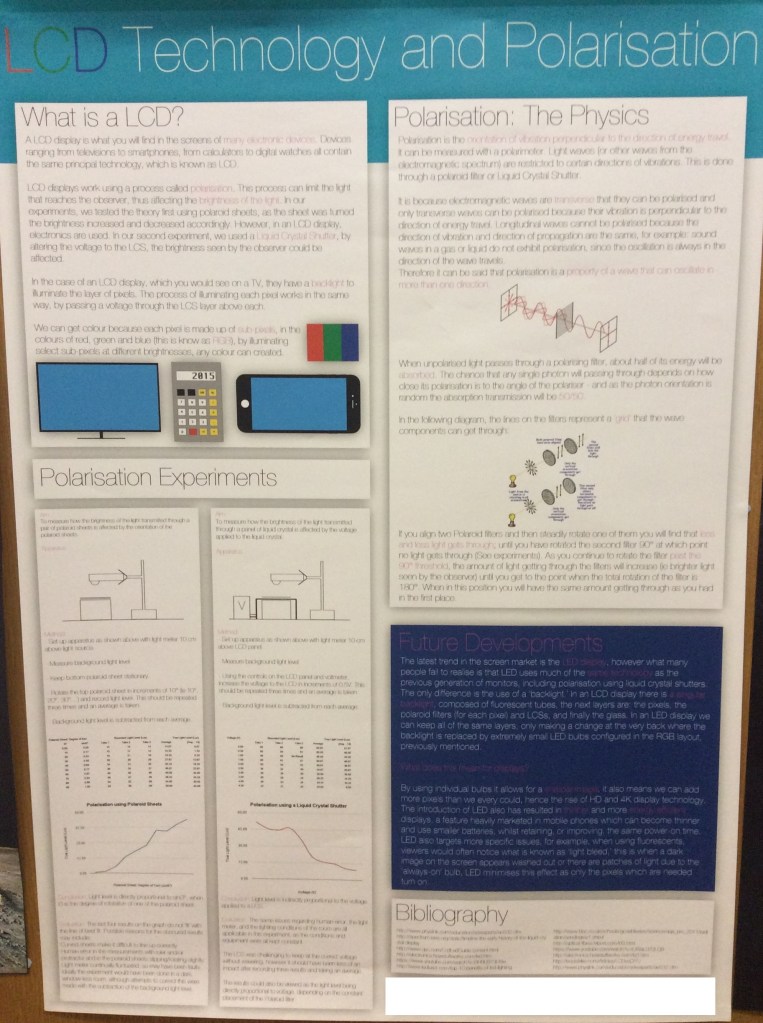
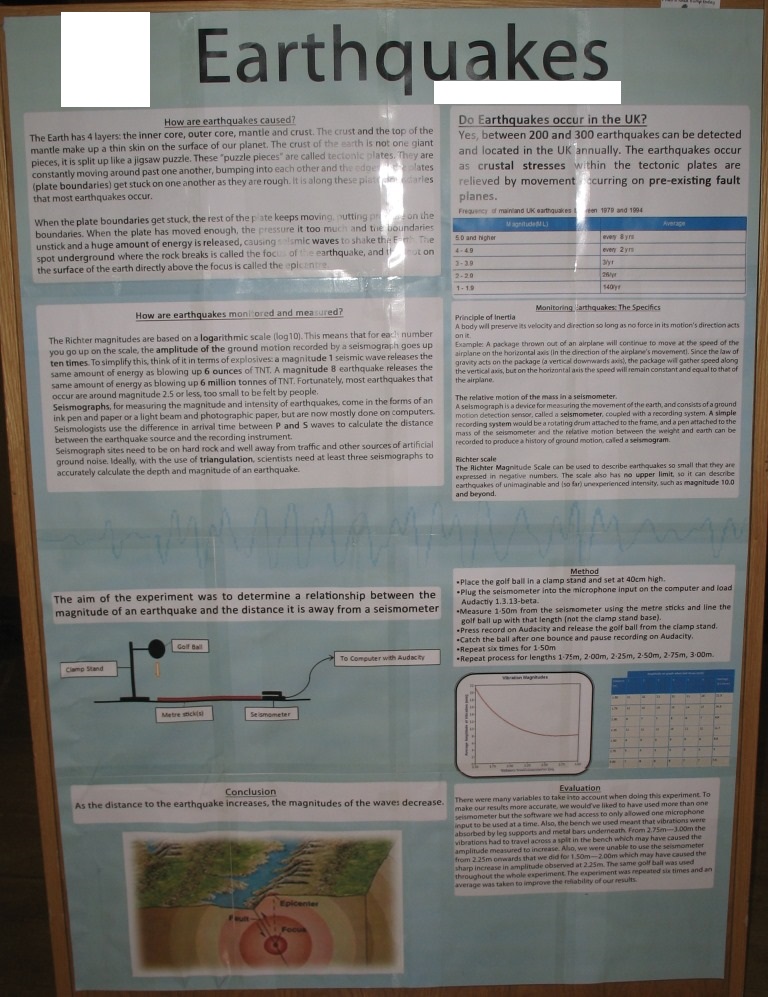
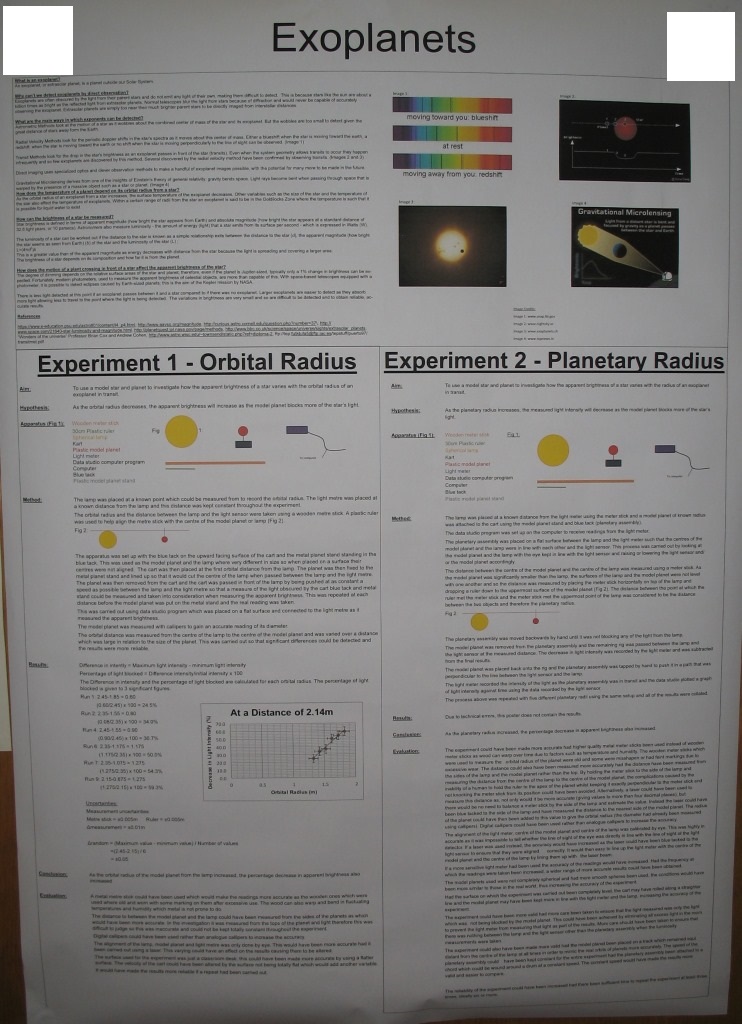
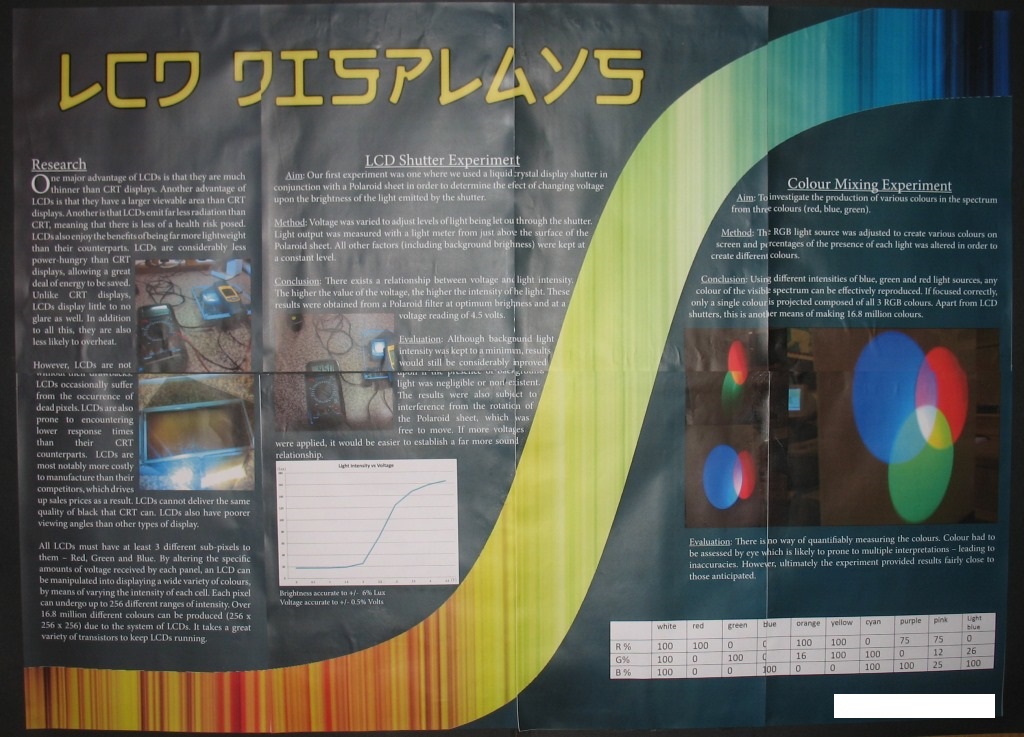
Some of the pupils were of course also able to transfer knowledge from the study of other subjects such as Graphic Communication, Art and Design, and the other STEM subjects too. However, the high level of skill these 16 and 17 year olds were able to display, certainly compared the that shown but pupils previously, was only because careful consideration had been given to how we taught the range of different knowledge needed from them to then conduct and communicate their physics investigations.
It is almost three years since the OECD identified the need to re-assess the role of knowledge in the Scottish curriculum but I am yet to see a significant appetite amongst many education professionals to really address what this means in practice. During this time there have been many reviews and consultations, and there appears to be growing doubt that all of these will be acted upon (Stell, 2024). However, I still consider it vitally important that if we are to improve Scottish education we need to reform the whole of the curriculum specifying much more clearly what we wish our young people to know, to do, and to understand. This requires us as a profession to prescribe much more clearly the powerful and enabling knowledge at each stage of the curriculum and which allows learners to progress and build their learning in an as efficient and effective way as possible. I also do not belief that to do so will de-professionalise teachers or remove autonomy or agency. Clearer national curriculum guidelines, developed by the profession, will minimise the time teachers need to spend working out what they ought to be doing and free up time for collaborative enquiry-based professional learning and local curriculum-making focussed on improving instruction in classrooms. This refocussing on improving pedagogy thanks to a better shared understanding of the curriculum should be a vehicle to enhance the professionalism of teachers, provided that inappropriate accountability pressures do not destroy the culture necessary for this to occur.
References
Bhattacharya, A. (2021). Encouraging innovation and experimentation in Scottish schools.
Chi, M. T. H., Feltovich, P. J., & Glaser, R. (1981). Categorization and representation of physics problems by experts and novices. Cognitive Science, 5, 121–152.
Commission on School Reform. (2022). Submission to the National Discussion on Education .
Humes, W. (2021). The ‘Iron Cage’ of Educational Bureaucracy. British Journal of Educational Studies, 70(2), 235–253.
McLennan, N. (2022, March 10). Let’s Blow The Whistle On Bullies In Scottish Education. Scotland Can. https://www.wecan.scot/we-need-a-whistleblower-to-end-scottish-educations-toxic-culture/
OECD. (2021). Scotland’s Curriculum for Excellence: Into the Future, Implementing Education Policies.
Perimeter Institute. (2018). Evidence for Climate Change (Ontario Grade 10). https://resources.perimeterinstitute.ca/collections/lesson-compilations/products/evidence-for-climate-change?variant=12375510089806
SCRCM. (n.d.). Stirling Centre for Research into Curriculum Making | About | University of Stirling. Retrieved 2 March 2024, from https://www.stir.ac.uk/about/faculties/social-sciences/our-research/research-groups/stirling-centre-for-research-into-curriculum-making/
Smith, R., Snow, P., Serry, T., & Hammond, L. (2021). The Role of Background Knowledge in Reading Comprehension: A Critical Review. Reading Psychology, 42(3), 214–240. https://doi.org/10.1080/02702711.2021.1888348
SSERC. (n.d.). SSERC. Retrieved 7 October 2023, from https://www.sserc.org.uk/
Stell, G. (2024). Jenny Gilruth questions Hayward recommendations for reform . The Herald. https://www.heraldscotland.com/news/24158094.jenny-gilruth-questions-hayward-recommendations-reform/
Tricot, A., & Sweller, J. (2014). Domain-Specific Knowledge and Why Teaching Generic Skills Does Not Work. Educational Psychology Review, 26(2), 265–283. https://doi.org/10.1007/s10648-013-9243-1
Willingham, D. (2007). Critical Thinking: Why Is It So Hard To Teach? American Educator, 31(2), 8–19.
 Stuart Physics
Leave a reply to Improving education – curriculum, explanations, professionalism and more – Part 3 – Stuart Physics Cancel reply